Tag Archives: NecronomiConPVD

Lovecraft, Lucretius, and Leonard’s Locomotive-God: Further Thoughts on Cosmic Horror

This post is a companion to and continuation of “‘The Dread Contemplation of Infinity’: Some Thoughts on George M. Gould and Cosmic Horror Before Lovecraft,” Where that essay explores how Lovecraft’s conception of cosmic horror is best understood as a transvaluation of that which predominated from the 1880s through to the 1930s, this essay further explores Lovecraft’s developing conception of cosmic horror by focusing on another of Lovecraft’s under-recognized contemporary influences; namely, the American professor, poet, memoirist, and translator, William Ellery Leonard. This post is based on the conference paper, “From Beyond the Pleasure Principle: Freud, Lucretius, Lovecraft and The Locomotive-God,” which I presented as part of the Henry Armitage Symposium at NecronomiCon in August, 2019. Some of the material on Lucretius, Poe and Lovecraft in the first section is drawn from my essay “The Poet’s Nightmare: The Nature of Things According to Lovecraft.” If you want a more developed (and fully cited) version of that material, you’ll find it there.

Much of this material will be further developed in my in-progress book, tentatively titled Repulsive Influences, which provides a genealogy of cosmic horror while exploring the intersecting histories of Lucretius’s reception and the emergence of Anglophone gothic, horror and weird fiction.

William Ellery Leonard (1876-1944)

LEONARD, LUCRETIUS AND LOVECRAFT

The first American to publish a complete English translation of Lucretius’s epic didactic poem De rerum natura was a professor of Classics at the University of Wisconsin named William Ellery Leonard (for an extensive study of Leonard’s life and work, see Neale Reinitz’s The Professor and the Locomotive-God.)

While his work is little read today, Leonard was among the most widely known American writers of his day, renowned both for his translations of Greek, Roman and Anglo-Saxon poetry and for his own poetry and his two memoirs, Two Lives and The Locomotive-God. The latter focuses entirely on the traumatic phobia that overshadowed Leonard’s life, and was widely read, both by psychologists (including Freud, whose correspondence with Leonard became part of the book) and general readers who were fascinated by Leonard’s minute, dramatically written analysis of his own “case.” Lovecraft thought highly of The Locomotive-God as a psycho-biographical memoir, and his curiosity regarding Leonard was no doubt intensified because, while it does not appear they ever met personally, they had only two degrees of separation via a number of members of Lovecraft’s Circle. Both men were friends with August Derleth, who was among Leonard’s pupils, and both also wrote appreciations of Frank Belknap Long’s writings

Quite apart from their shared social connections, Leonard’s writings bear importantly upon Lovecraft’s in ways that have, to my knowledge, never been critically explored. This essay focuses on two apertures through which Leonard’s work influenced Lovecraft’s developing conception of cosmic horror.

EDGAR POE AND LUCRETIAN COSMICISM

The first occurs in 1916, with the publication of Leonard’s translation and interpretations of Lucretius, On The Nature of Things. Leonard’s translation includes an end-note appended to the first instance of his use of the term Cosmos in translating part of Lucretius’ opening Hymn to Venus (DRN I 21). Leonard justifies his lexical choice by writing:

“In Greek, a technical term of that Stoic philosophy to which Lucretius was opposed; but in English fairly equivalent to the Epicurean “natura rerum,” through the associations of the word with Spencer’s “Cosmic Philosophy” and with modern materialism.”
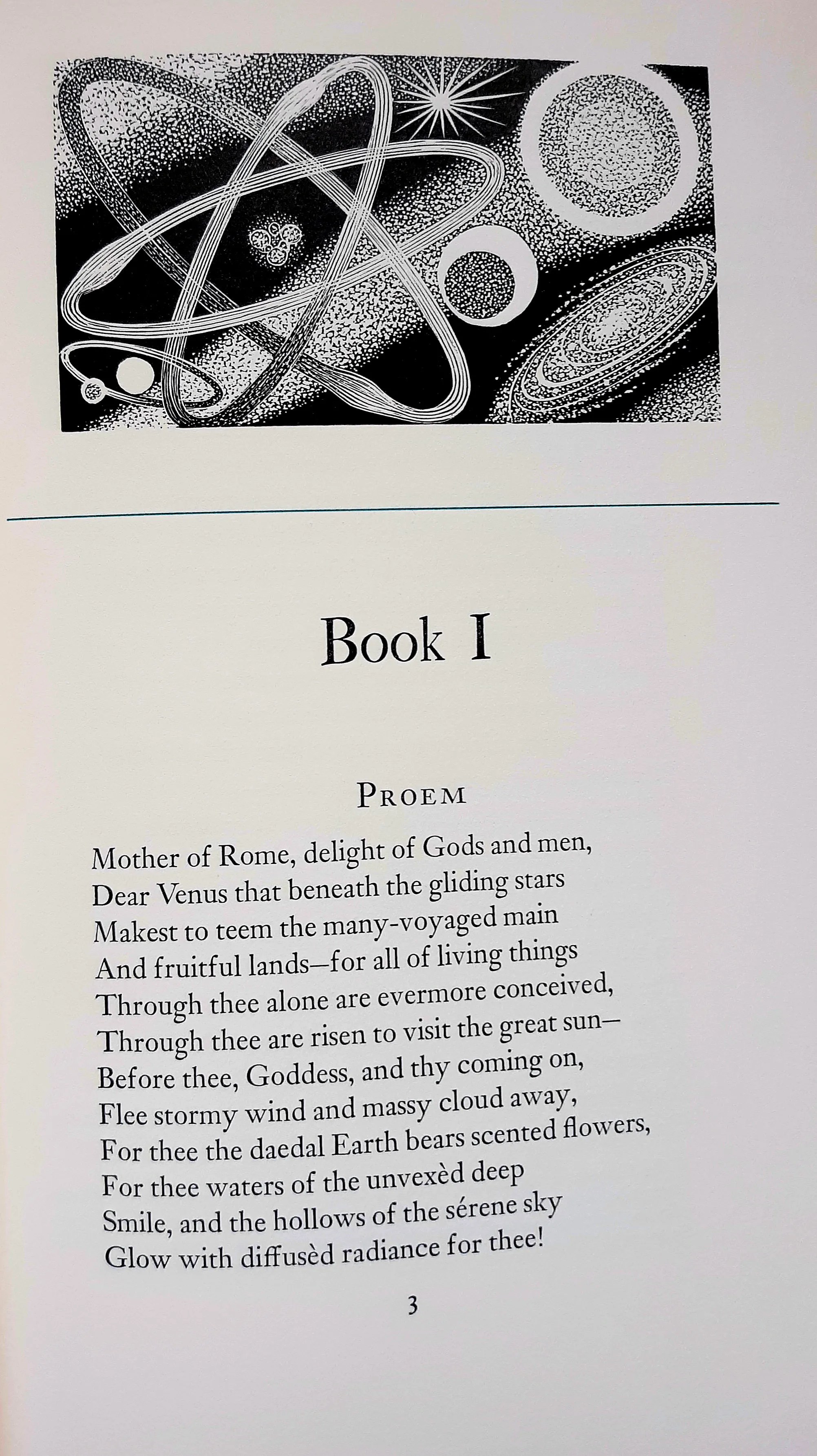
Paul Landacre’s illustrations for the Limited Edition Club’s 1950s reprint of Leonard’s translation beautifully capture the cosmic sensibility of the poem.

Lucretius’s avoidance of the Greek word cosmos is informed by its teleological connotations, but Leonard suggests that these connotations need no longer apply given the term’s adoption by modern materialist thinkers. Lovecraft seems to have shared Leonard’s view in this respect, as his adoption of the term cosmicism to characterize his own philosophical sensibility suggests. Indeed, Lovecraft’s cosmic vision, following from Lucretius’s, is radically opposed to teleological assumptions about the natural world. S.T. Joshi writes:

“The central tenet in what Lovecraft called his “cosmic indifferentism” is mechanistic materialism. The term postulates two ontological hypotheses: 1) the universe is a “mechanism” governed by fixed laws (although these may not all be known to human beings) where all entity is inextricably connected causally; there can be no such thing as chance (hence no free will but instead an absolute determinism), since every incident is the inevitable outcome of countless ancillary and contributory events reaching back into infinity; 2) all entity is material, and there can be no other essence, whether it be “soul” or “spirit” or any other non-material substance. Lovecraft evolved these ideas through a lifelong study of ancient and modern philosophy, beginning with the Greek Atomists (Leucippus and Democritus), their followers Epicurus and Lucretius (whose belief in free will Lovecraft was forced to abandon), and such modern thinkers as Ernst Haeckel, Thomas Henry Huxley, Friedrich Nietzsche, Bertrand Russell, and George Santayana. Lovecraft’s metaphysical views seem to have solidified around 1919, when he read Haeckel’s The Riddle of the Universe (1899; English translation 1900) and Hugh Elliot’s Modern Science and Materialism (1919).”

What effect Leonard’s translation and commentary may have had in shaping Lovecraft’s philosophical views is difficult to determine; in all likelihood, it was probably minor. The verbal and aesthetic parallels between Leonard’s translation and some of Lovecraft’s writings from this period, however, are intriguing, and particularly the “Aletheia Phrikodes” section of Lovecraft’s 1918 poem “The Poe-et’s Nightmare.” While the larger poem’s mock-epic structure is a love-letter from Lovecraft to his Augustan idol Alexander Pope, once called the “English Lucretius,” the “Aletheia Phrikodes” section is a cosmic stew in which blank verse Lucretian imitation is peppered with allusions to Edgar Allan Poe, beginning with the longer poem’s original title itself. One brief section serves to illustrate how Lovecraft twines Lucretius and Poe together:

Whilst whirling ether bore in eddying streams
The hot, unfinish’d stuff of nascent worlds
Hither and thither through infinity
Of light and darkness, strangely intermix’d;
Wherein all entity had consciousness,
Without th’ accustom’d outward shape of life.
Of these swift circling currents was my soul,
Free from the flesh, a true constituent part;
Nor felt I less myself, for want of form. (italics mine)
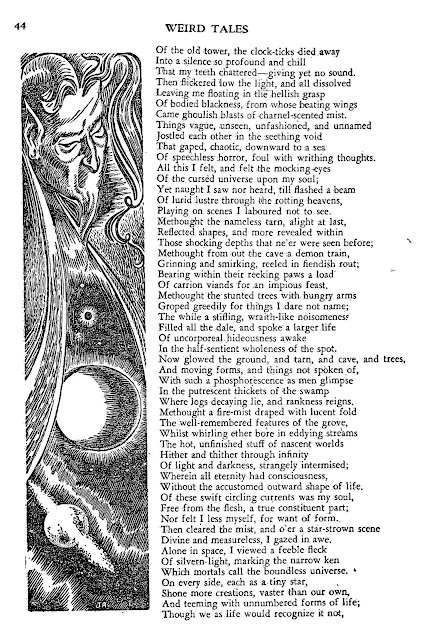
The visual interplay between Jon Arfstrom’s illustrations for Lovecraft’s poem in Weird Tales and Landacre’s illustrations for Leonard’s Lucretius is striking.

At once cosmogony and nekuia, The passage is part of an extended improvisation on both DRN V’s astronomic and meteorological passages and DRN III’s descriptions of the soul’s perishable materiality, but it also invokes Poe’s cosmic vision in early poems like “Al Aaraaf” and the cosmological prose poem, Eureka. In describing these fluctuating vortexes of metamorphic materiality as “eddying” streams, Lovecraft emphasizes the Poe-etic nature of this cosmic maelstrom.

That Lovecraft and Leonard shared an appreciation for Poe as cosmic visionary, a sort of American Lucretius, is certain. Such a view had been propounded by James A. Harrison, in his 1902 edition of Poe’s collected works; Harrison declared that “Both, in their poems, were passionate inconoclasts, idealists, dreamers of the speculative philosophies that looked into the causes of things; both set aside what they considered the degrading superstitions,” and were “refined materialists of an almost spiritual type,” which likely shaped both Lovecraft and Leonard’s associations between Lucretius and Poe.

Poe’s work is rife with eddying whirls and turbulent vortices, some of which spiral down into the oceanic depths, others of which whirl up and out through the unfolding universe of stars. Indeed, the spiral, in the dynamic form of the vortex, is the most pervasive and important motif in Poe’s writings, and engenders his aesthetics of the grotesque and arabesque, as Patricia Smith observes:

“The arabesque as Poe sees it is an attempt to suggest something kinetic — the motion toward unity — in a static medium; symbolically, it is always moving in the direction of the form-obliterating spiral. The man whirling about on Aetna resolves all he sees into a radical blur by means of his spin; the universe itself, in Eureka, collapses ultimately into a state of nihility. As in the Maelstrom, where all things “meet together at the bottom,” the final vision toward which the arabesque points is one in which unity is perceived, and it is impossible to distinguish one thing from another.”

Poe’s vortexes reflect his materialist metaphysics, which in turn derive from his own transformative reception of the classical atomist influences he shares with Lovecraft. Whether Lovecraft had read Leonard’s entire translation before drafting his poem is unclear, although he was certainly aware of its existence, and likely to have seen excerpts, as it was widely reviewed and noticed. That he had done so by 1922 is almost certain, as he mentions it approvingly in a letter to Lillian Clark, while noting that Derleth gifted a copy to Sonia Greene : “The generous little divvle is making presents on a large scale–Smith’s ‘Star Treader’ for me, an art book for Kid Belknap, & Leonard’s translation of Lucretius for Mrs. Greene–with whom he is trying to make up after his rudeness of last spring. Leonard is his English professor at the U. of Wis.–a scholar of note.”  

Leonard’s phrasing reinforces the resemblance between this passage in DRN and Poe’s description of the whirlpool in “A Descent into the Maelstrom,” a tale that signals its own atomistic underpinnings by both its epigraphic reference to the Democritean δῑ́νη and its deliberate echo of Lucretius’s most famous passage, the “suave mari magno” description of a shipwreck that opens DRN II.
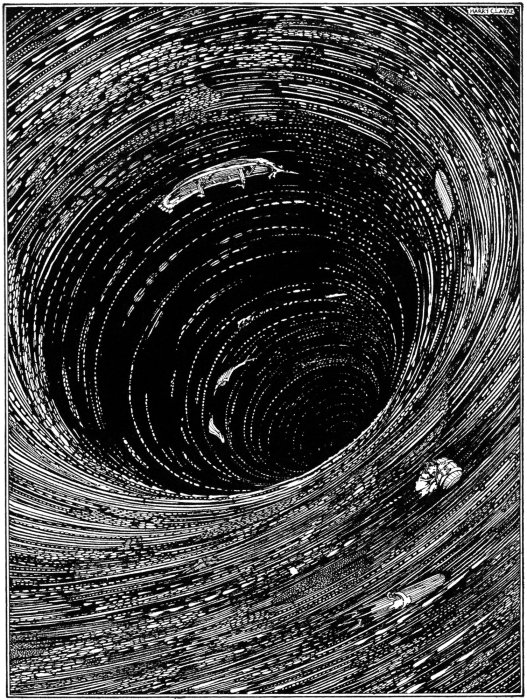
Harry Clarke’s illustration (1919) for Poe’s “Maelstrom,” much admired by Lovecraft.

Leonard makes his Poe-tical homage even more evident a few pages later. Lucretius provides a naturalistic explanation for the absence of birds at Greek oracular sites including Cumae, an absence traditionally attributed to the awful supernatural influence of the gods. Instead, Lucretius explains that noxious gases that leak forth from the earth keep the birds away from such sites, which Leonard renders as “birdless tarns,” echoing Poe’s use of this antiquated term in describing the miasmic body of water into which the House of Usher falls. Leonard’s translation reads:

            And such a spot there is

            Within the walls of Athens, even there

            On summit of Acropolis, beside

            Fane of Tritonian Pallas bountiful,

            Where never cawing crows can wing their course,

            Not even when smoke the altars with good gifts,–

But evermore they flee—yet not from wrath

Of Pallas. (VI.280)

This echo of  “The Raven” suggests, much as “The Poe’et’s Nightmare” does, Poe’s concatenation with Lucretius. Whether Lovecraft had read all of Leonard’s translation at this stage is unclear, but it nonetheless telling that both writers, soi-disant opponents of Poundian Modernism, returned to the Democritean δῑ́νη via such parallel descents.
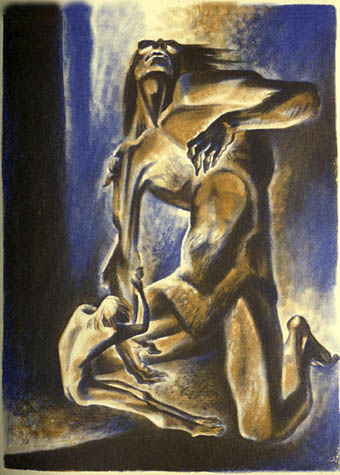
Beowulf battling Grendel in one of Lynd Ward’s illustrations for Leonard’s translation.

LUCRETIUS, FREUD AND LEONARD’S LOCOMOTIVE-GOD

A decade before Leonard published his 1927 psycho-biographical account of his phobic obsessions, The Locomotive-God, his often- incapacitating agoraphobia was already reflected in the anxious intensity and alienation of his translations. In Leonard’s Lucretius, the descriptions of immensity and the void and the characterization of the monstrous Religio are particularly harrowing, as are his renditions of Grendel and the dragon in Beowulf, and each of these draws force from the compulsive power of Leonard’s growing anxiety.
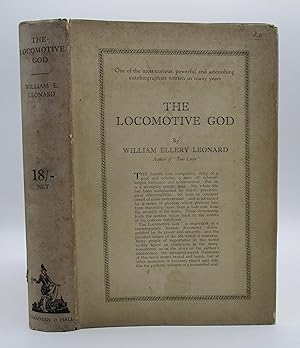
The cover of a 1928 printing of The Locomotive-God

 Leonard’s phobia worsened considerably after 1918, in the wake of the catastrophic First World War. Near the opening of the book, Leonard writes:

“What was so poignantly my subconscious mind reveals itself, by the laws of our most common organic structure and development, as the mind of mankind. My own pain, my own struggle, has been, even to myself, a spectacle, a laboratory. And my findings differ in some ominous particulars from the previous record of poets and psychoanalysts. I have been persuaded […] by the desire to frustrate, by a neat and unexpected turn, those Demonic Forces which, as appearances go, have backed me for so many years against the wall. Beset by phobias, shell-shocked in a civilian war […] So out of very suffering and very failure I would create value: the value of a scientific document, the value of a work of art.”

When atoms meet in the void through the clinamen, they can combine, or they can collide. Thus, attraction and repulsion are the fundamental principles of Epicurean physics. Lucretius, however, renders these in mythological terms derived primarily from Empedocles: Venus is a personification of attraction and combination, and Mars of repulsion and collision. In his post-war writings, especially Beyond the Pleasure Principle, Freud returns to such an Empedoclean mythic polarity with his conception of The Death Instinct as a counter to the Pleasure Principle.

It is a conception inspired, as W. Scott Poole emphasizes in his study of the Great War’s decisive influence on modern horror, by Freud’s horror at the catastrophic consequences of the war, consequences that Leonard also believed to have intensified his phobia, amplifying the power of the Locomotive-God over his mind and behaviour.

Leonard expresses this revelation in terms that are both explicitly Freudian, and explicitly Lucretian:  “The “love-emotion” “could relive but not break the tension of the tangled mythology in which the subconscious in its deepest levels still believed…and still believes. The Locomotive-God won even against Aphrodite, goddess of manhood.”

The Locomotive-God traces Leonard’s trauma-induced phobic paralysis to a memory from his early childhood. As a two-year-old-child, he stood on a platform and watched a train pulling into the station. Disregarding his mother’s cries, he wandered to the edge of the tracks, until:

“It towers and lowers and grins in one awful metamorphosis, more grotesque than the most bizarre dreams of Greek mythology […] As It roars over the bridge […] scattering dust and strewn newspaper, the black circle of the boiler-front swells to the size of the round sky out of which the Thing now seems to have leaped upon me [….] this Aboriginal Monster. My eyeballs, transfixed in one stare, ache in their sockets.”

This terrifying memory would superimpose itself over, and come to stand for, every subsequent traumatic event Leonard would experience in his life. He writes,

“To me at a little more than two years, the Black Circle flashes a fiercely shaking Face of infinite menace, more hideous and hostile than Gorgon-shield or the squat demon in a Chinese temple, with gaping Jaws, flanked by bulging jowls, to swallow me down, to eat me alive—and the Thing is God […] God roaring from heaven to slay me for having disobeyed my mother and gone so close to the track.”

As an older child, Leonard would witness a cat struck by a train, which triggered the original trauma: “the cat got tangled up in the unseen web of my thought with the instrument of its death—the locomotive.” This led Leonard to claim that “terror is the supreme emotion of life, and it borrows its color from its Master, Death.”

As Leonard wrote his translation of Lucretius, “the Thing” would colour his descriptions not just of the immensities of the void, but also the description of Religio, Lucretius’s figuration of religion as a feminized embodiment of irrational compulsive power, that very force that Epicureanism is supposed to overcome. It is a figuration that resounds throughout Lovecraft’s non-fictional writings on atheism as clearly as his tales of malignant cults. Leonard speculates that “Much that we call Superstition is really Phobic Fear, not understood as such by the victim or those who gird at the victim; even as Phobic phenomenon have surely been a prime source, feeding the speculations and prepossessions of theologies pagan and Christian, of the belief in witchcraft.”

LOVECRAFT AND THE LOCOMOTIVE-GOD

            The Locomotive-God’s influence on Lovecraft has gone largely unremarked, but it is hard to overstate its importance. More than any other single influence, it led Lovecraft further away from Gould’s predominant conception of cosmic horror, and helped cement for him the importance of the work on the nature of horror being done by psychologists including John B. Watson (on which see Dr. Sharon Packer’s essay) and Freudian psychoanalysis.

Leonard’s characterization of terror as “the supreme emotion of life” resonates powerfully with that with which Lovecraft begins his own 1927 essay on supernatural horror. Leonard’s frenetic description of the Locomotive-God, with its fusion of animal and vehicle, raw machinic power and perverse vitality, industrial modernity and primordial psychic dread, resonates powerfully with many of Lovecraft’s post-1929 monsters; most obviously, the shoggoths of 1931’s At the Mountains of Madness derive much of their terrifying imagery and potency from Leonard’s Locomotive-God.

Illustration of a shoggoth from At the Mountains of Madness by Nottsuo from Deviantart.

In a 1929 letter to Derleth, Lovecraft acknowledged Leonard as “A character, & a figure of real importance in American letters.” By this point, he had read The Locomotive-God, and his letters praise the penetrating psychology of traumatic obsession that Leonard’s book offers. For example, a 1931 letter recommends it to Robert E. Howard as essential reading for anyone interested in psychobiography. As his recommendation to Howard reinforces, The Locomotive-God was crucial to Lovecraft’s conception of the power of atmosphere, the sine non qua of cosmic horror. Leonard’s provision of a mechanistic explanation for his own psychic trauma was especially valuable to Lovecraft as of 1931, as at this stage in his career he was explicitly looking for ways to generate “an atmosphere” of cosmic dread without turning to the superstitious tropes of classic supernatural horror.  Leonard writes,

“The mechanism in its technique can be made clear to the reader. We start with a state of terror generated by past experience. The past experience itself remains in the subconscious. Its emotional effect, terror, bursts into consciousness. At times the emotional effect remains merely a diffused state of terror, in intensity running the whole scale from vague anxiety to intensest feel of impending death; and the agonized mind stands balked of any explanation whatever.”

Lovecraft later praises Leonard’s insight into his phobic experiences in a 1931 letter to Maurice Moe: “Unless one is steeled against the ascendancy of the capricious and meaningless subjective feelings, he is lost so far as the power of rational appraisal of the external world is concerned. Thus poor W. E. Leonard sees and feels things that aren’t there–and knows he does–yet continues to see and feel them just the same. That shows the power of irrational mood over rational perception.” It is precisely this power that, from 1927 on, Lovecraft, departing further from Gould’s nineteenth-century medico-theological concept, sees as the sine non qua of the best supernatural horror fiction, and, reinforcing his adoration of Poe, comes to term an “atmosphere” of “cosmic dread.”


.
Tagged , , , , , , , , , , , , , , , , , , , , , , , , , ,

The Downward Spiral: Thoughts on Lovecraftian Spirality and Ito’s Uzumaki

By Sean Moreland

This informal and image-driven essay is loosely based on two closely related conference papers. The first was given as part of the academic track of NecronomiCon, in Providence, RI, August 2017. The second was delivered as part of the Visual & Performing Arts & Audiences Division at the International Conference on the Fantastic in the Arts in March, 2018. I further develop my analysis of the relationship between Lovecraft’s “cosmic horror” and the aesthetics of the sublime in the essay “The Birth of Cosmic Horror from the S(ub)lime of Lucretius,” in New Directions in Supernatural Horror Literature. My analysis of the significance of spiral motifs in Lovecraft, and especially in his writings up to 1927, is developed in the article “Stages of The Spiral: Lovecraft’s Descent into the Maelstrom,” which will appear in the collection Lovecraftian Proceedings Volume 3, forthcoming summer 2019 from Hippocampus Press. Eventually, these ideas will be more fully developed as a chapter in my book-in-progress, Repulsive Influences: A Historical Poetics of Atomic Horror.

***

Untitled


Asked in an interview about the influences on his magnum opus of comic-cosmic horror, Uzumaki, renowned mangaka Junji Ito replied that the “different stages of the spiral” visualized by the book “were definitely inspired from the mysterious novels of H.P. Lovecraft.”

As Ito’s remark suggests, Uzumaki responds to and adapts Lovecraft’s spirals as figurations of cosmic horror, figurations profoundly influenced by Lovecraft’s own historical, cultural, and scientific context.

Untitled

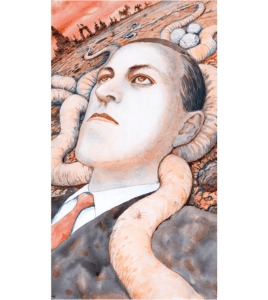
HPL ala Ito


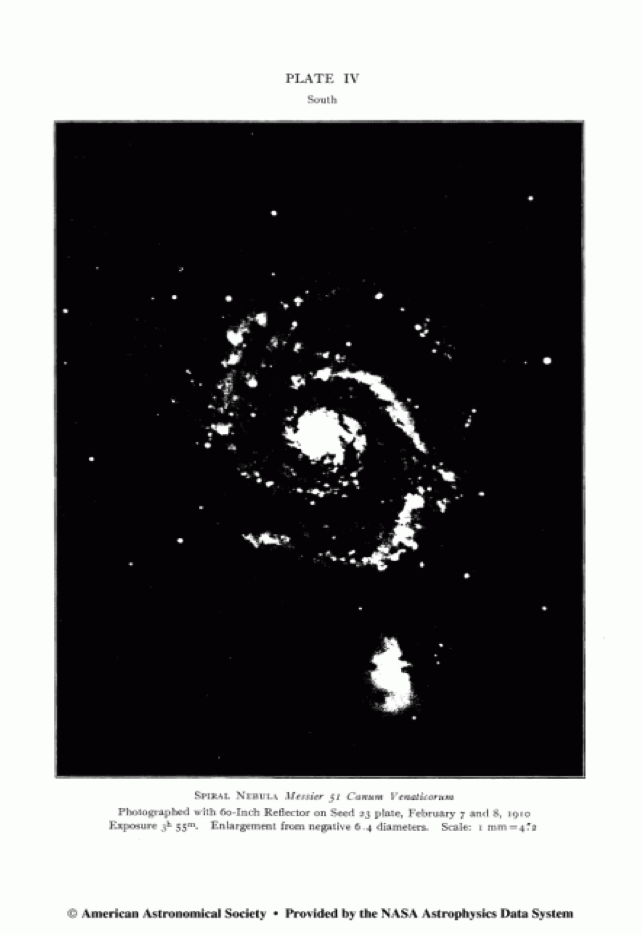
In Lovecraft’s writings, spirals initially figure visible cosmic order and scientific discovery, as suggested by his excited responses to early photographic images of the spiral nebula. In 1917, Lovecraft wrote:


“A recent discovery of immense importance to our knowledge of the structure of the universe is that of the incredibly rapid rotation of certain large spiral nebulae… how rudimentary is our present information regarding the larger outlines of the visible creation wherein we dwell.”

Untitled

G.W. Ritchey’s 1910 photoplate of the M51 spiral nebula


In Lovecraft’s writings as of 1918, however, beginning with “The Poe-et’s Nightmare,” spirals increasingly come to figure disorder and chaos, an association intensified by Lovecraft’s gradual acceptance of the cosmic consequences of the second law of thermodynamics, contemporaneously with what he called the “maelstrom” of the First World War’s chaotic violence. As Lovecraft puts it in a 1923 letter to Frank Belknap Long:

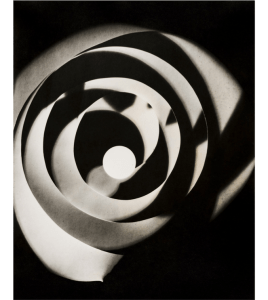
“In art there is no use in heeding the chaos of the universe. I can conceive of no true image of the pattern of life and cosmic force, unless it be a jumble of mean dots arrang’d in directionless spirals.” It is a remark Lovecraft makes by way of criticizing the “chaotic” work created by Modernist and surrealist writers and artists, which (futilely, to his mind) attempts to reflect the (dis)order of existence by eschewing traditional formal structures.

Untitled

1923 spiral photograph by Man Ray


Without explicitly referring to Lovecraft, Uzumaki  provides a powerful realization of how spirals in his writing figure at once an ordered, mechanistic and predictably determinate universe, and a chaotic and unknowable one. I take Ito’s acknowledgement of Lovecraft’s influence as a license to frame Uzumaki (perhaps perversely) in terms of the context of Lovecraft’s work, although this necessarily means  tearing it from the context of Japanese cultural, narrative and visual traditions in the late 20th century. Largely excluded from my discussion, for example, are Uzumaki’s connections to Ero-Guro-Nansensu, the spiral patterns of Hokusai’s ukiyo-e, Ito’s parodying of conventions of popular romance manga, or his homages to fellow horror mangaka Kazuo Umezu.

e37ce6069c05955f420b3fe5a1c65572 (1)

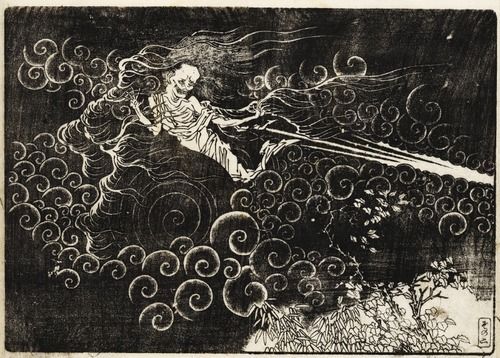
Katsushika Hokusai’s ukiyo-e often feature spiral motifs, including many of his “laughing demon” images and the better-known Great Wave off Kanagawa.

Similarly, I don’t explore the topic of Lovecraft’s wider cultural reception in Japan. Readers interested in this topic should see Hisadome Kenji, “The Cthulhu Mythos in Japan,” trans. Edward Lipsett, Night Voices, Night Journeys Volume One: Lairs of the Hidden Gods, edited by Asamatsu Ken (Fukuoka: Kurodahan, 2005), 339-352,. Those interested in HPL’s pervasive influence in manga and anime could start with Jason Thompson’s NSFW piece here.

Unlike artists Osamu Tezuka, Richard Corben, John Coulthard, or Ian Culbard, Ito has never produced a literal adaptation of Lovecraft’s stories. Unlike Alan Moore, he is not known for his re-imaginings of Lovecraft’s characters or plots; nevertheless, Ito is among the most important visual interpreters of Lovecraftian cosmic horror, and Uzumaki is his greatest expression of it to date. Ito is open about Lovecraft’s influence; he remarks, with apposite vagueness, that Lovecraft’s expressionism with regard to atmosphere greatly inspires my creative impulse.” Ito’s characterization of Lovecraft echoes Lovecraft’s own definition of weird fiction in Supernatural Horror in Literature, which emphasizes “A certain atmosphere of breathless and unexplainable dread of outer, unknown forces,” and “a malign and particular suspension or defeat of those fixed laws of Nature which are our only safeguard against the assaults of chaos and the daemons of unplumbed space.”

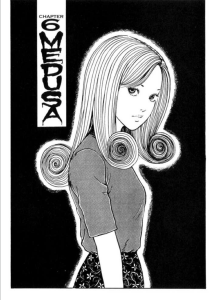
Uzumaki provides such a suspension by visualizing the gradual speiromorphosis of a coastal Japanese town, portraying an ensemble cast of ill-fated characters while often focusing on the futile escape attempts of two students, Kirie Goshima and Shuichi Saito. Uzumaki offers a few implicit homages to Lovecraft’s stories, particularly with the chapter “The Medusa,” reminiscent of Lovecraft’s collaboration, “Medusa’s Coil” (minus the viciously racializing subtext.)

Untitled

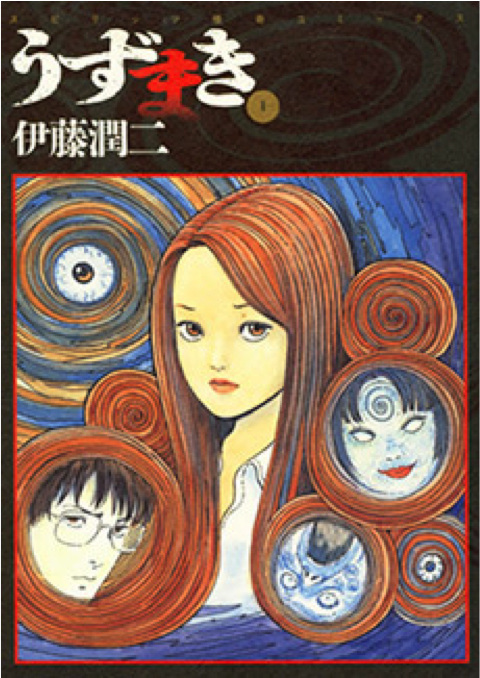
Junj Ito, Uzumaki, trans. Yuji Oniki (San Francisco: VIZ Media, 2010)

However, Ito’s interest in the epistemological and aesthetic roots of Lovecraft’s spiral obsession is most evident in the “lost” chapter of Uzumaki, making it an effective bridge between the early 20th century astronomical context of Lovecraft’s cosmic horror and the turbulent transfigurations of Uzumaki as a whole.

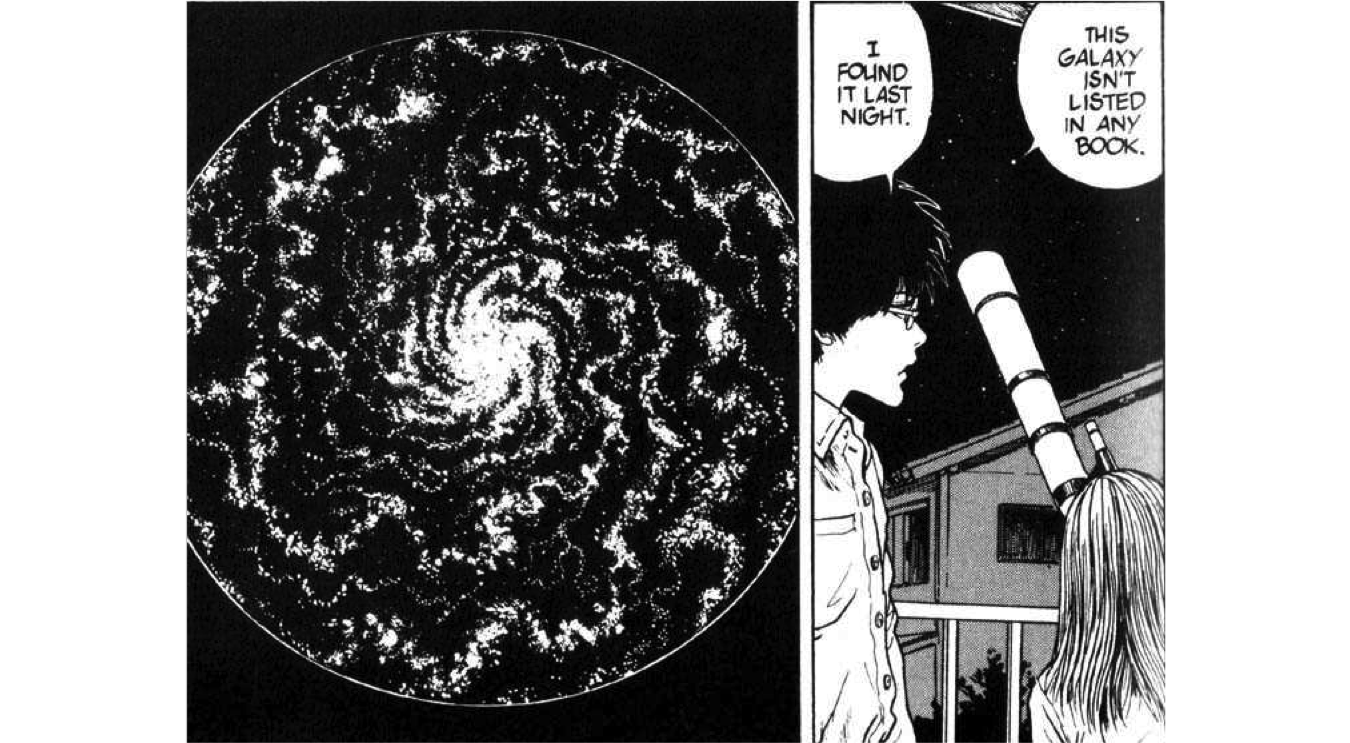
Called “Galaxies,” this chapter is disconnected from the rest of the arc, appearing in the VIZ omnibus edition as a sort of postscript. “Galaxies” introduces the spiral as an alien astronomical phenomenon.

Untitled

Junj Ito, Uzumaki, trans. Yuji Oniki (San Francisco: VIZ Media, 2010)

It begins with Shuichi telling Kirie that he has discovered a galaxy that “isn’t listed in any book,” insisting she look through his telescope to see for herself. Kirie is the visual focus of the opening panels; the reader looks at her. With the fourth panel, we see the spiral phenomenon for the first time through her eyes, a traditional suturing technique in both comics and film.

We see the human locus of our identification, then we see the supernatural threat through their eyes, then we see their reaction to it, and so on. Inside the panel’s square borders is a circular secondary border representing the telescopic lens. Inside that, a twisting spiral stellar formation, strongly reminiscent of early photographs of the spiral nebulae.

The next page shifts scenes and elides time, showing Kirie at school, telling her science teacher about the discovery. While skeptical, he agrees to ask his friend, “an armchair astronomer” to verify Shuichi’s find. Another turn of the page brings the reader to that night, and the home of Torino, struck with manic elation when he sees the spiral galaxy for himself (617). The discovery leads to “a sudden astronomy boom” in Kirie’s school, the “new” galaxy becoming an object of community-wide obsession. This obsession is especially powerful for Shuichi and Torino, who both experience “radio waves”  emanating from “some entity” in the spiral galaxy, an echo of the interstellar telepathic communication practiced by many of Lovecraft’s alien entities.

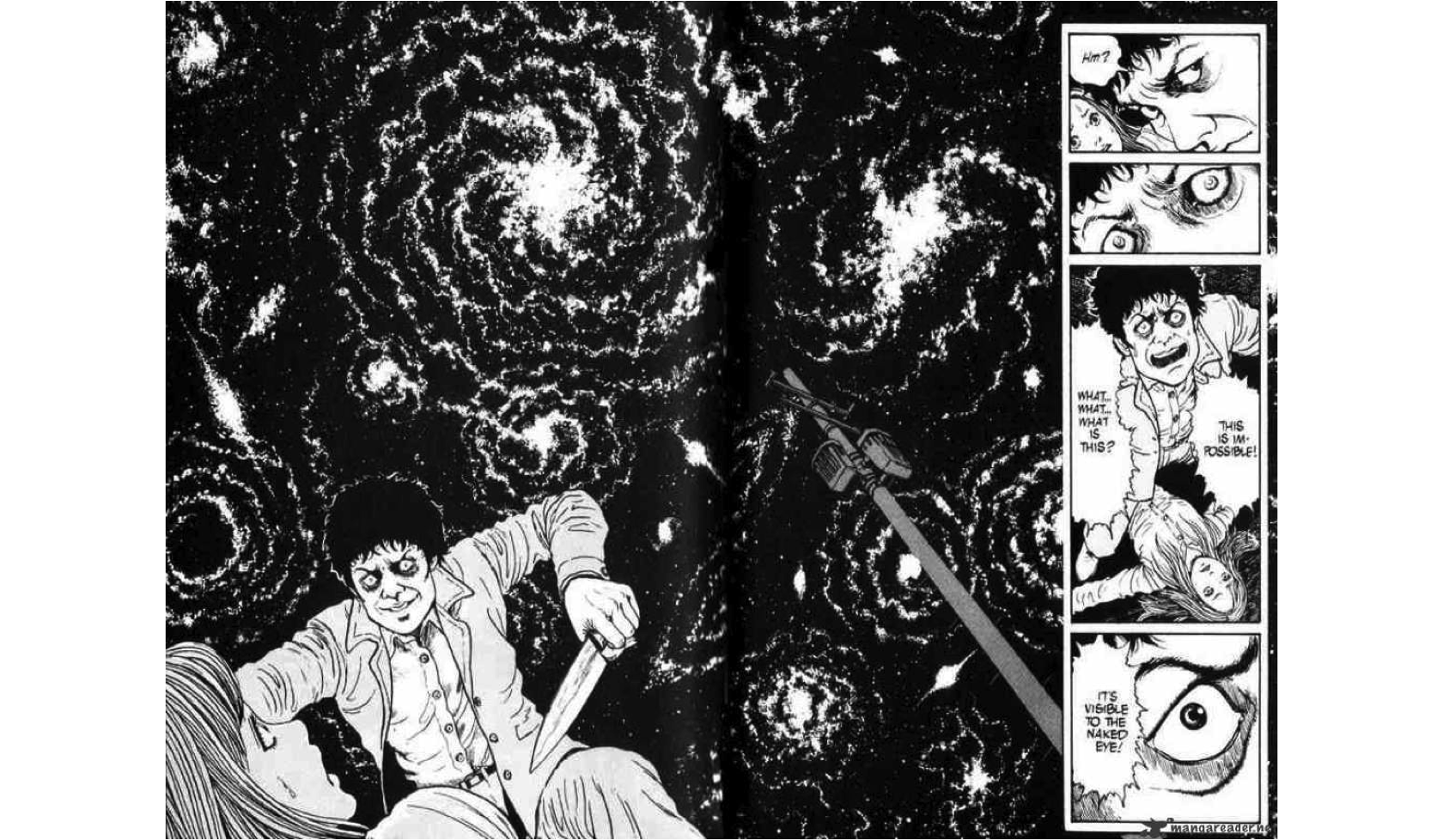
Shuichi is desperate to escape this nefarious astral influence, while Torino wants to use it to glorify himself. He tells Shuichi that he must kill him, in order to get credit for the discovery. Eventually, more new galaxies are discovered, emerging as if in correspondence with the individual subjectivities of the town’s residents, beckoning each of them to their own particular sidereal dissolution, a conceit closely related to that at the heart of Ito’s manga, The Enigma of Amigara Fault. Delirium and violence ensue, culminating in Torino’s attempts to kill Kirie, who objects to his taking credit for Shuichi’s discovery:

Untitled

As he overpowers her, the sky behind him erupts into a swirling mass of stellar spirals. Kirie is spared as Torino shouts up to the swirling mass of stars, demanding they acknowledge him as their discoverer; he is then swept up in a cosmic whirlwind, his head twisting into a nested series of spirals, until it explodes outwards and up, turning into a small galaxy and surging up to the heavens.  “Galaxies” is a grotesque mockery of the anthropocentric hubris of the romantic sublime, in which the object is observed, absorbed, and used to stabilize and elevate human subjectivity. Instead of this stabilization, Torino is translated into an astronomical object himself, displaying what Vivian Ralickas, with reference to Lovecraft’s stories, calls an “inherent, anti-humanist critique of sublimity.” Ito follows Lovecraft in revealing the pseudo-apotheosis of religious and romantic sublimes to be ridiculous, while expressing this absurdity in images that are themselves sublime; stellar nebulae, hurricanes, whirlpools, cyclopean subterranean structures.

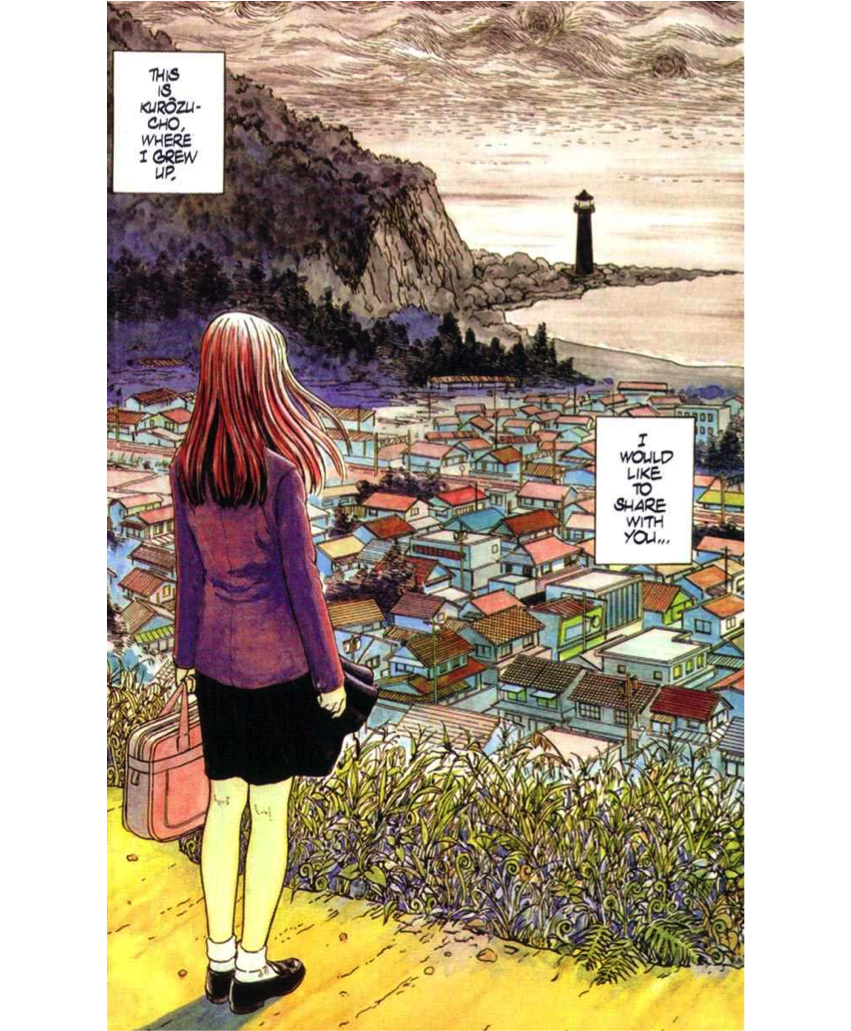
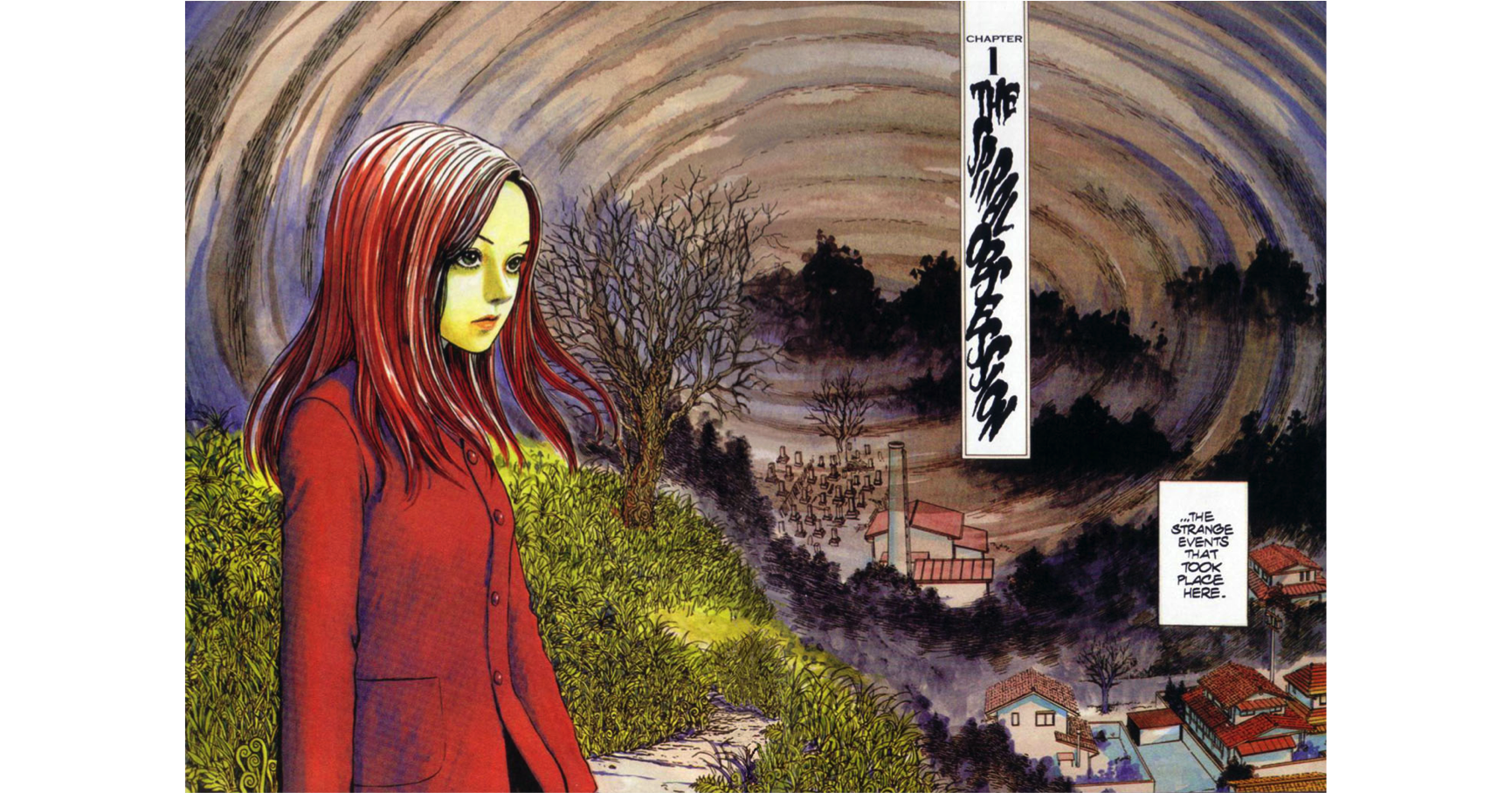
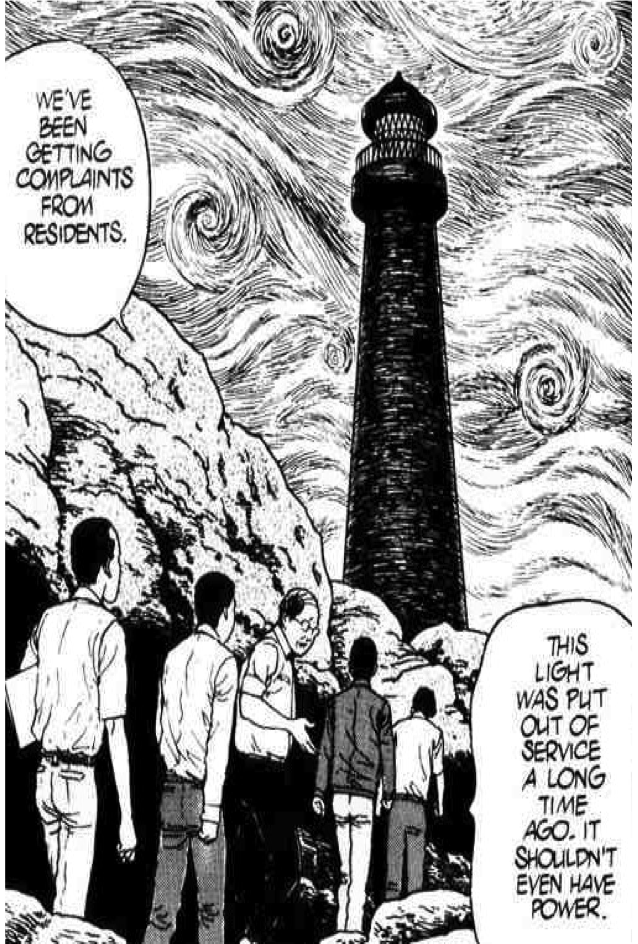
Uzumaki proper opens very differently, with an establishing full-bleed splash: Kirie stands atop a hill, her back to the reader, looking out over the town and toward a misty grey sea, distant black lighthouse and scuttling clouds.

Untitled

Junj Ito, Uzumaki, trans. Yuji Oniki (San Francisco: VIZ Media, 2010)

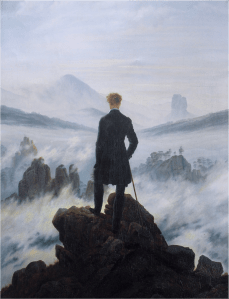
This composition is in many ways a traditional Rückenfigur, echoing a painting long associated with Romantic sublimity, Kaspar David Friedrich’s “Wanderer Above a Sea of Fog” (1818).

Untitled

Kaspar David Friedrich’s “Wanderer Above a Sea of Fog” (1818).

Friedrich’s painting puts viewers in the position of witnessing the encounter between human subject and sublime landscape, inviting them to revel in this figure’s mastery of nature. The Wanderer’s position conceals his face, universalizing the encounter between spectator and spectacle while inviting disinterested reflection by preventing the emotional contagion of a facial close-up. An elevated, masculine figure, Friedrich’s Wanderer is an emblem for the mastery of nature by a transcendental aspect of human subjectivity, whether it is understood to be sensibility (as in Ann Radcliffe’s novels) or moral reason and a sensus communis (as in the Kantian version of the sublime encounter.)

The Wanderer’s placement is paralleled by Kirie’s, but with a number of significant differences. Where the Wanderer’s stance bespeaks strength and mastery, his arms cocked confidently as he leans on his cane, Kirie’s bespeaks apprehension and vulnerability. One hand clenches the handle of a schoolbag, its pinkish colour linking it to the roofs of the tidy houses below; her feet, close together, point directly toward the gathering storm visible on the horizon, the line of her narrow shadow stretching behind her, suggesting her inexorable movement toward it. Subtly, this signals the agency of the spiral itself, an agency to which Kirie and the other human characters can only passively respond. Kirie’s other hand hangs half-curled at her side in a nervous clench, index finger slightly open, as though she is about to point the storm out to the viewer who lurks, unseen, behind her. Where the Wanderer surmounts his environment and is fully centred, Kirie is offset. Despite her elevated vantage above the town and sea, she is askew, displaced. Where the Wanderer seems implacable, Kirie is buffeted by unseen powers.

The horizon, fog and wind in Friedrich’s painting are soft, nebulous, edgeless in contrast to the Wanderer, who is as solid as the indomitable rocky promontory on which he stands; contrastively, the dark density of the lighthouse in Ito’s image draws both Kirie and the reader’s eyes, underlining the stormy sky’s surge of black lines. In three places, these lines converge into whirlwinds. These whorls are echoed by a series of tiny spiralling plants emerging from the clutch of wild grasses visible between Kirie and the town. These green fuses appear innocuous here, but their presence on this page crucially distinguishes its introduction of speiromorphism from that in “Galaxies” by portraying it not as an extra-planetary, alien force, but as an elemental principle, already diffusely present in the earth and its diverse life.

Untitled

Junj Ito, Uzumaki, trans. Yuji Oniki (San Francisco: VIZ Media, 2010)

When readers turn to the second page, the small spirals on the opening splash are supplanted by a single, brush-stroked, vaporous spiral, extending to the edges of the full-bleed two-page spread that follows.  Kirie’s apprehensive face stares off the facing page, where presumably the clouds still swirl ominously. Opposite her, beneath the line of her gaze, past the grass, more of which now coils, the town sprawls. Friedrich created space for disinterested contemplation by putting the Wanderer between viewer and landscape and excluding his face from the image. While this effect is echoed by Uzumaki’s opening page, it is shattered here, as the reader comes face-to-face with Kirie’s wide-eyed visage. It is a jarring transition, especially because the swerve of perspective that produces it means readers have executed a spiral in relation to Kirie’s position, curving ahead of and moving menacingly toward her.

From its outset, Uzumaki uses its visual style and structure to aggressively undermine the privileging of the human figure in images informed by Romantic capitulations of the sublime encounter. It also subtly sutures the reader’s perspective, but not to Kirie (as the more traditionally structured “Galaxies” does). In these opening pages, we are invited to watch Kirie, rather than identify with her, while our perspective is sutured instead to the invasive swerves of the spiral. Thus Ito visually realizes Lovecraft’s dictum that the “true ‘hero’” in weird fiction is a “set of phenomena”:

“Individuals and their fortunes within natural law move me very little. They are all momentary trifles bound from a common nothingness toward another common nothingness. Only the cosmic framework itself—or such individuals as symbolize principles (or defiances of principles) of the cosmic framework—can gain a deep grip on my imagination and set it to work creating. In other words, the only “heroes” I can write about are phenomena.”

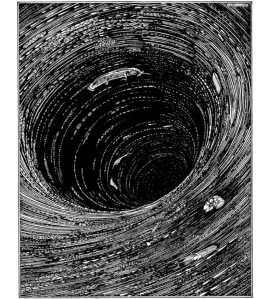
While its presentation varies widely from episode to episode, the phenomenon at Uzumaki’s core is, effectively, the idea that under a certain set of unexplained conditions, at certain times, every object and entity in the vicinity of Kurozo-Cho becomes subject to a perverse version of fluid mechanics, spontaneously beginning a gradual transition from a laminar to a turbulent flow regime, assuming the form of a vortex or eddying whirl. This transition is signalled by Ito’s visual references to Harry Clarke’s illustration of Poe’s “A Descent into the Maelstrom”:

Untitled

Clarke’s 1919 illustration for Poe’s tale

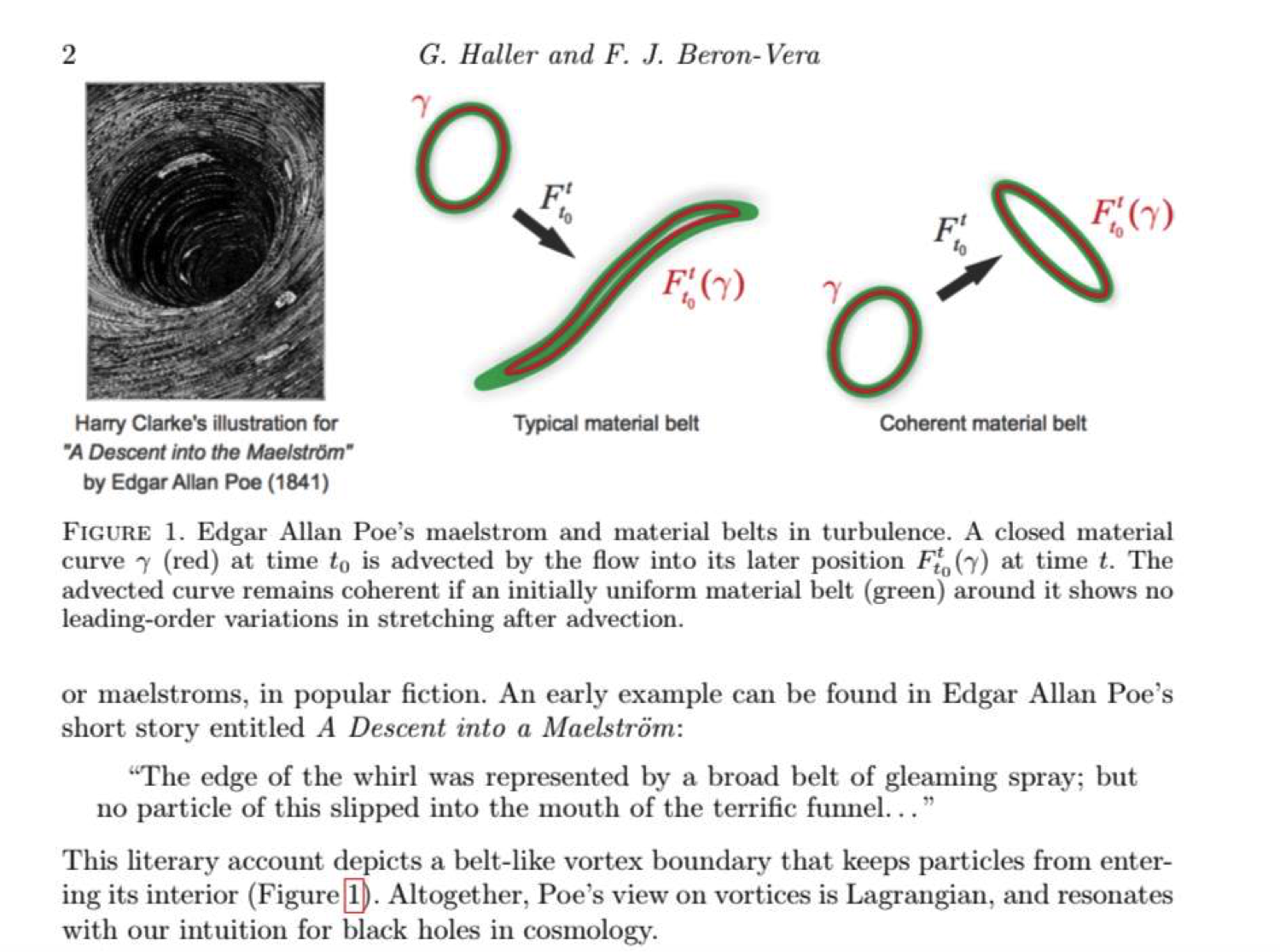
Poe’s description of the marine vortex in “Maelstrom,” deeply influenced by his interest in 19th century mathematics and astronomy, has been held up by some physicists as uncannily anticipating contemporary research into the dynamics of marine and astronomical vortices, leading some contemporary physicists to use it as verbal demonstration of the mechanics of a Lagrangian vortex, arguing that it “resonates with our intuition for black holes in cosmology.”Untitled

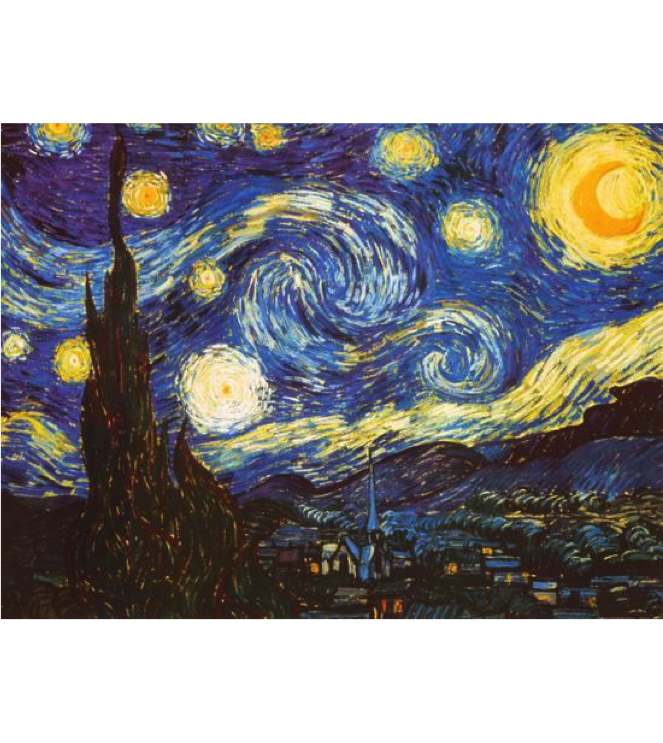
The whirled horizon on Uzumaki’s opening page also suggests a second visual parallel, this time to Van Gogh’s “Starry Night.” This parallel becomes more evident as Uzumaki unfolds.

Untitled

Vincent Van Gogh, “The Starry Night,” 1889.

In Uzumaki’s opening splash, the too-close vertical shape of the poplar trees in “Starry Night” is paralleled by Kirie’s figure, and where the emerging spire of a church punctures Van Gogh’s town, it is the distant, but darkly prominent, image of the lighthouse that punctures Ito’s.

Later in Uzumaki, the lighthouse assumes the position of Van Gogh’s poplars, uncannily underlining the unruly animation of an architectural object that is itself subject to seemingly undirected, turbulent transformation. Ito and Lovecraft’s shared fascination for vortices also accounts for Uzumaki’s many visual allusions to Van Gogh’s paintings, which have fascinated modern physicists by their detailed visual representations of turbulent flow.

Untitled

Junj Ito, Uzumaki, trans. Yuji Oniki (San Francisco: VIZ Media, 2010) a caption


Ito excels at creating awe-inspiring and horrifying effects through his curvilinear visual designs and narrative structure. His detailed, dynamic depictions of turbulent matter lend a realism to Uzumaki that make a suspension of disbelief possible even during its most outré episodes. His line-work serves a purpose similar to the gradual accumulation of physical detail that shores up Lovecraft’s greatest works of mature cosmic horror, “At the Mountains of Madness,” The Colour out of Space,” and “The Shadow Out of Time.”

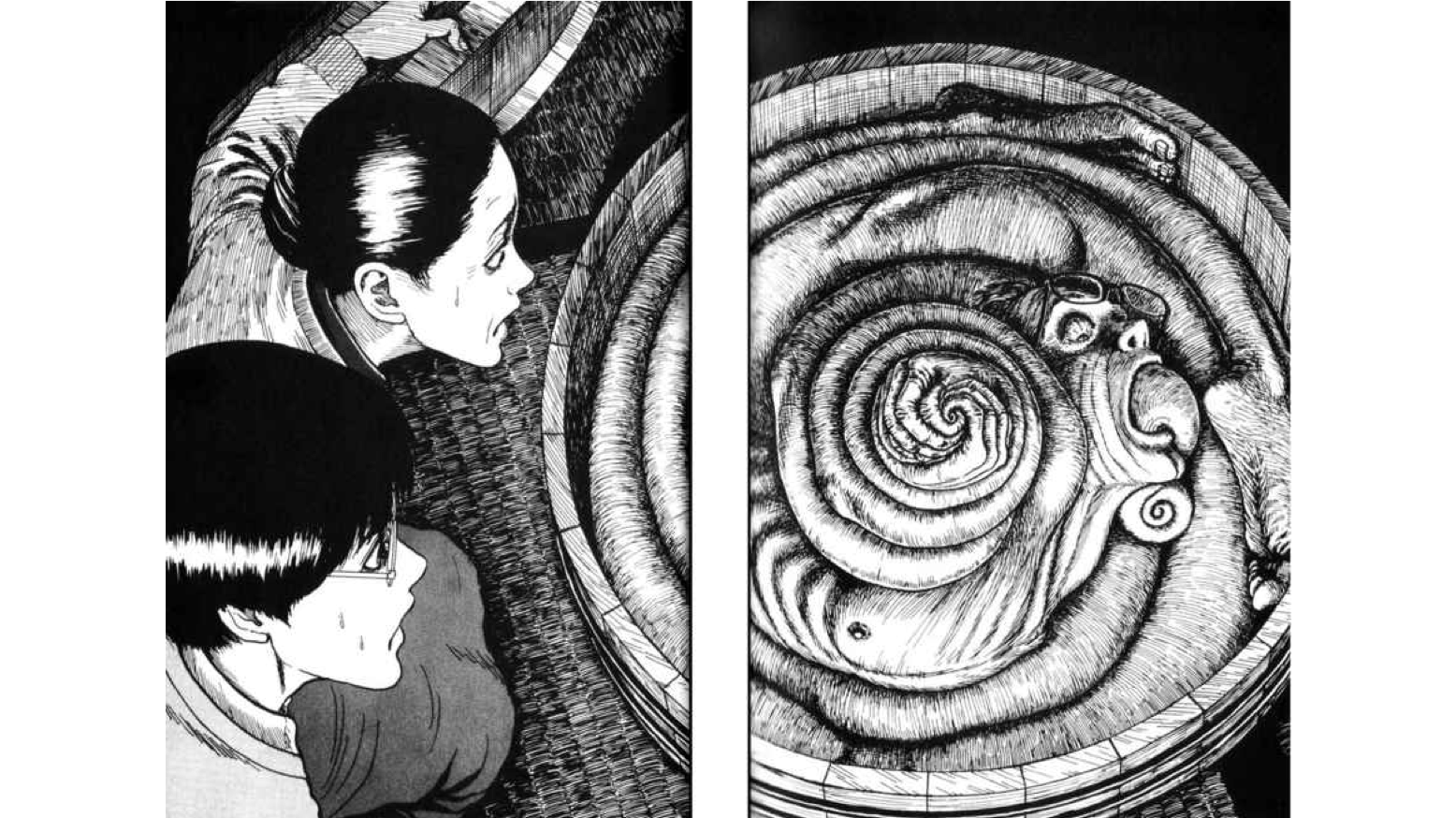
Ito’s vortical techniques create unforgettably inventive grotesques. Their cumulative effect is a distortion, and eventually an erasure, of the human figure, one first made explicit by the fate of Shuichi’s father:

Picture1

You and me…. or proto-maki? Junj Ito, Uzumaki, trans. Yuji Oniki (San Francisco: VIZ Media, 2010)

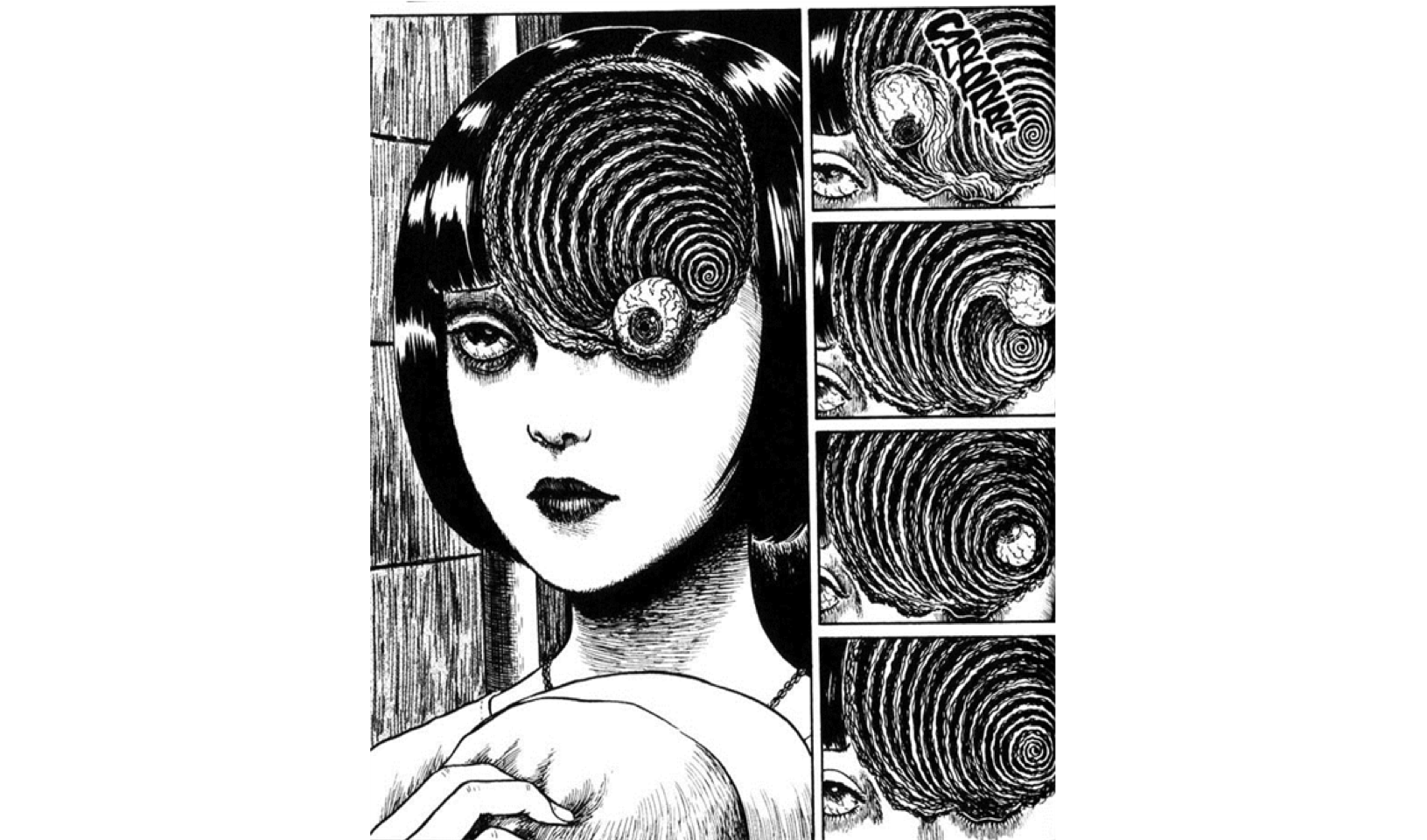
Uzumaki‘s third chapter introduces Azami, a new student at Kirie’s school. A visual echo of Ito’s earlier manga character Tomie, Azami has a small crescent-shaped scar on her forehead, which she claims typically makes her irresistibly attractive. Under Uzumaki’s turbulent regime, however, the scar rapidly transmutes from a charming crescent into a spiral, continually increasing its dimensions by drawing more and more material into its involutions, absorbing first the majority of Azami’s face, and then objects and characters in her vicinity.

During this episode, a series of panels focused on Azami’s face forces readers to follow the course her eye takes as it spirals into the vortex most of her visage has become, finally receding into the depths of the panel and disappearing. By forcing readers to follow Azami’s displaced eye down a vortex into subliminal oblivion, this page provides a disturbing metonymy of Uzumaki’s suturing of the reader’s gaze to spirality itself:

Picture1

Junj Ito, Uzumaki, trans. Yuji Oniki (San Francisco: VIZ Media, 2010)

Uzumaki uses its weird regime of turbulent flow to birth numerous grotesques, torquing human forms over and over again into spiral mutations in a relentless visual erasure of the anthropic that is, arguably at least, more “Lovecraftian” than anything Uncle Theobald himself ever wrote.

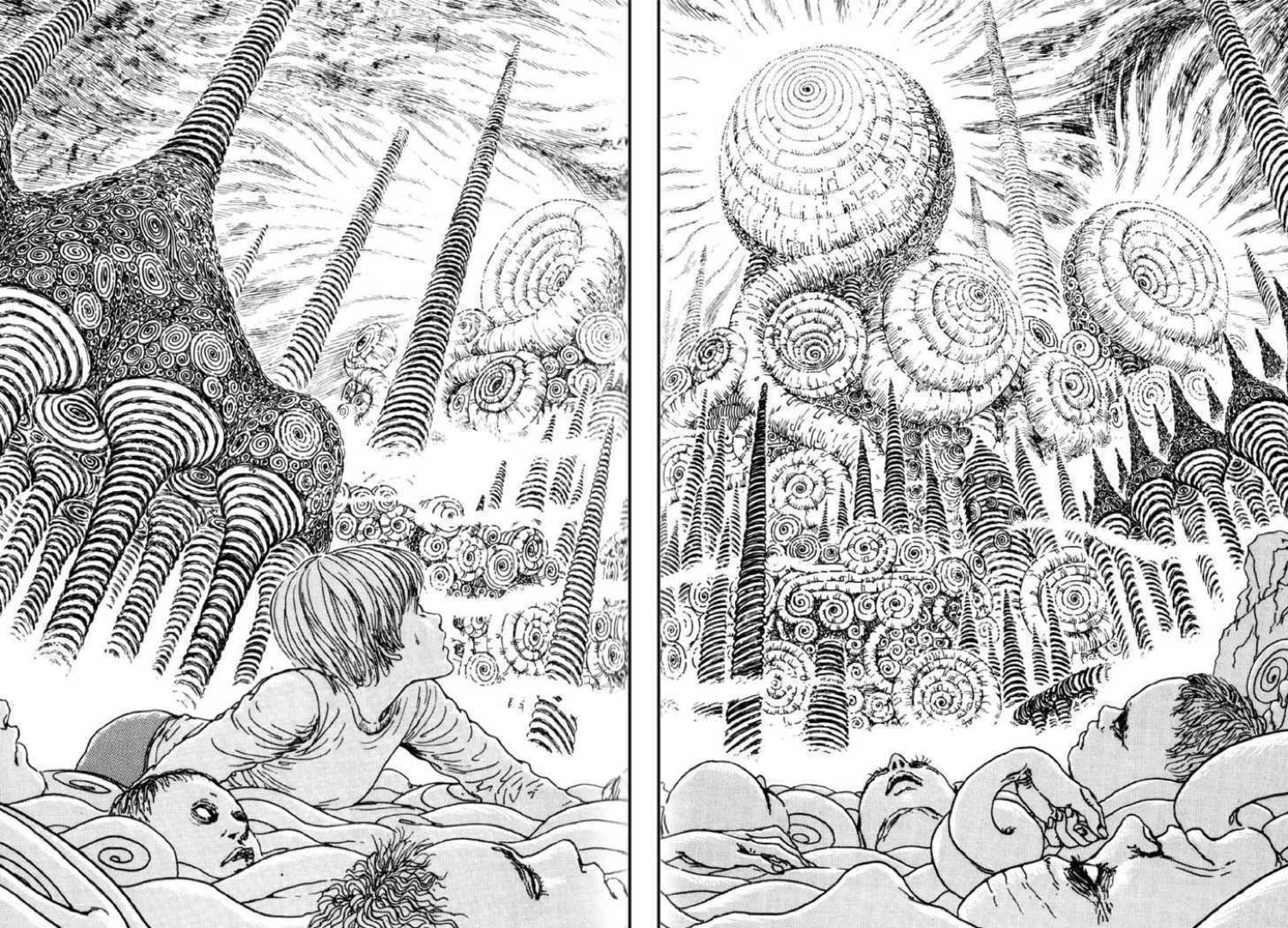
The manga is at its most Lovecraftian during Kirie and Shuichi’s descent into the subterranean mega-spiral structures that turn  below the transfigured town. This brief procession of panels in particular echoes the “palaeogean megalopolis” discovered by Danforth, Dyer and co. in At the Mountains of Madness.

Picture1

Junj Ito, Uzumaki, trans. Yuji Oniki (San Francisco: VIZ Media, 2010)

Appropriately enough, it is in Mountains that the tension between the spiral as chaotic emblem of undirected mutation and the spiral as emblem of harmonious order becomes most evident.  Here, the admirable (for HPL, in any case) civilization of the Elder Things is embodied in their architectural art, oriented around a “spiral band of heroic proportions,” while the revolting, destructive power of the shoggoth is likewise figured by the spiral waves of force that surge before its protoplasmic bulk.

Ultimately, however, Ito draws his readers into cosmic horror with a rather unLovecraftian comical twist. Much as “Galaxies” humorously subverts the lofty aspirations of the cosmic sublime, Uzumaki romantically subverts Lovecraft’s grimdarkest reaches with a dark grin.

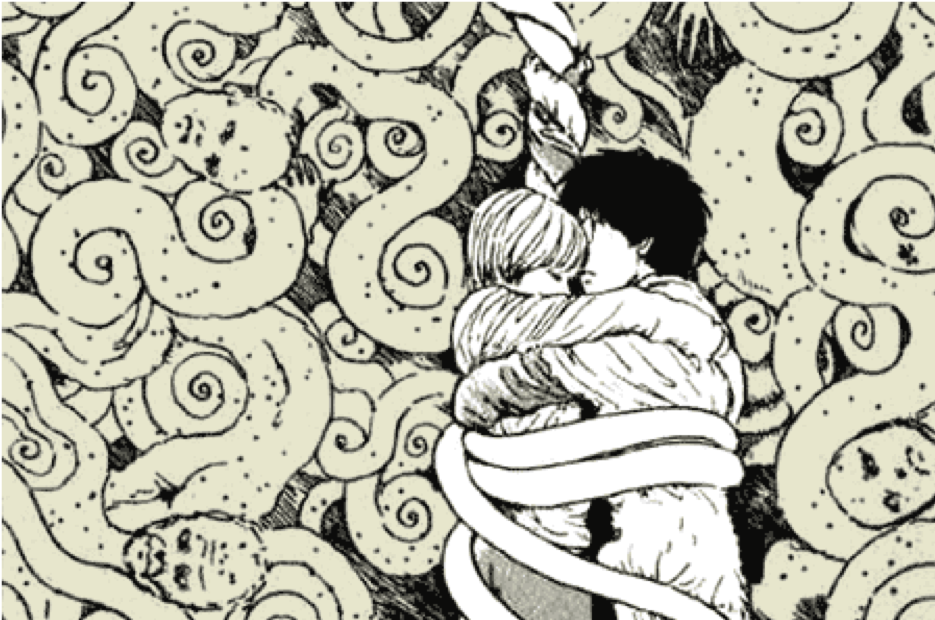
Its final, and strangely sweet, visualization of speiranthropy occurs with the culmination of Kirie and Shuichi’s star-crossed romance. The beset teens finally share an embrace that leads to their coiling around one another in a serpentine double-helical structure. In these panels, speiranthrôpos marries the microcosmic spirals of DNA to the macrocosmic mega-spiral that absorbs the entire town into its unity on the pages that follow. 

Picture1


This is the last glimpse Uzumaki offers readers of an anthropic form. The remaining panels provide interior images of the mega-spiral’s self-completion as vast, conjoined symmetrical speiromorphs interlink and twist. The panel borders fragment these massive forms, a Piranesian effect that amplifies their alien majesty. The relationship between panel-to-panel movement and narrative time is ambiguated; there is no narration, the images overlaid instead by sibilant, inhuman onomatopoeia that intersects the images it overlays in a disorienting, and literally posthuman, montage.

Until the reader turns to the last page, that is… But that’s another conversation.


Tagged , , , , , , , , , , , , ,

Necro(nomiCon)scopy 2017

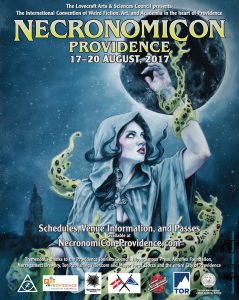
NecronomiCon-Providence-Convention-August-17-20-2017

What follows are a few fairly scattered observations from my recent trip down to New England with friends Derek Newman-Stille and Bob D. to attend NecronomiCon 2017 in Providence, after a brief foray in Salem.

I want to start by thanking and congratulating Niels Hobbs, s.j. bagley, Farah R. Smith and the many other folks involved in organizing and evolving NecronomiCon.  They had (and continue to have) daunting, precarious, practically endless, and hugely significant work to do in putting this epic event together, in enabling it to grow, and in making it appealing, and more importantly, accessible, to those whose interest in the weird involves more than a fetishistic and apologetic adoration for HPL, a figure in many ways as influential, difficult and divisive as his at-one-time-more-famous contemporary, Ezra Pound.

Organizing any convention on this scale is a cyclopean achievement, but NecronomiCon presents particular difficulties, given the controversial nature of Lovecraft’s xenophobic views and their connection to his widespread popular influence,. This is further complicated by the ardent desire of some  fans and disciples to write only hagiographically about Lovecraft, or to make him an icon of alt-right white nationalism.

I’ve attended NecronomiCon at each of its bi-annual iterations since it was revamped in 2013, and this year’s Con has been, to my mind, the best so far. I never dreamed I’d find writer Nnedi Okorafor and film-maker Richard Stanley as guests of honour at the same convention, and their shared presence here speaks volumes about the multiple directions the Con has taken in recent years. Also improving with each iteration is the scope and quality of the Henry Armitage academic panel sessions. NecronomiCon has become a rare site of fusion between popular convention and academic conference.

(You can read my thoughts on the 2015 NecronomiCon,  the difficulties posed by reconciling Lovecraft with weird fiction understood inclusively and internationally, and the appeal of cutesy and tweird collectibles here. For a fictionalized, pointedly satirical, and unsettlingly comical roman-a-clef account of the 2015 ‘Con thinly veiled as a metafuzzical-murder-mystery, read Nick Mamatas’s novel, I Am Providence, and for a gorgeously written, compelling fictive glimpse into the erotics, obsessions, and proprietary politics that characterize some strains of Lovecraft fandom and scholarship alike, I highly recommend Paul LaFarge’s novel The Night Ocean,.

IT’S ALIVE!

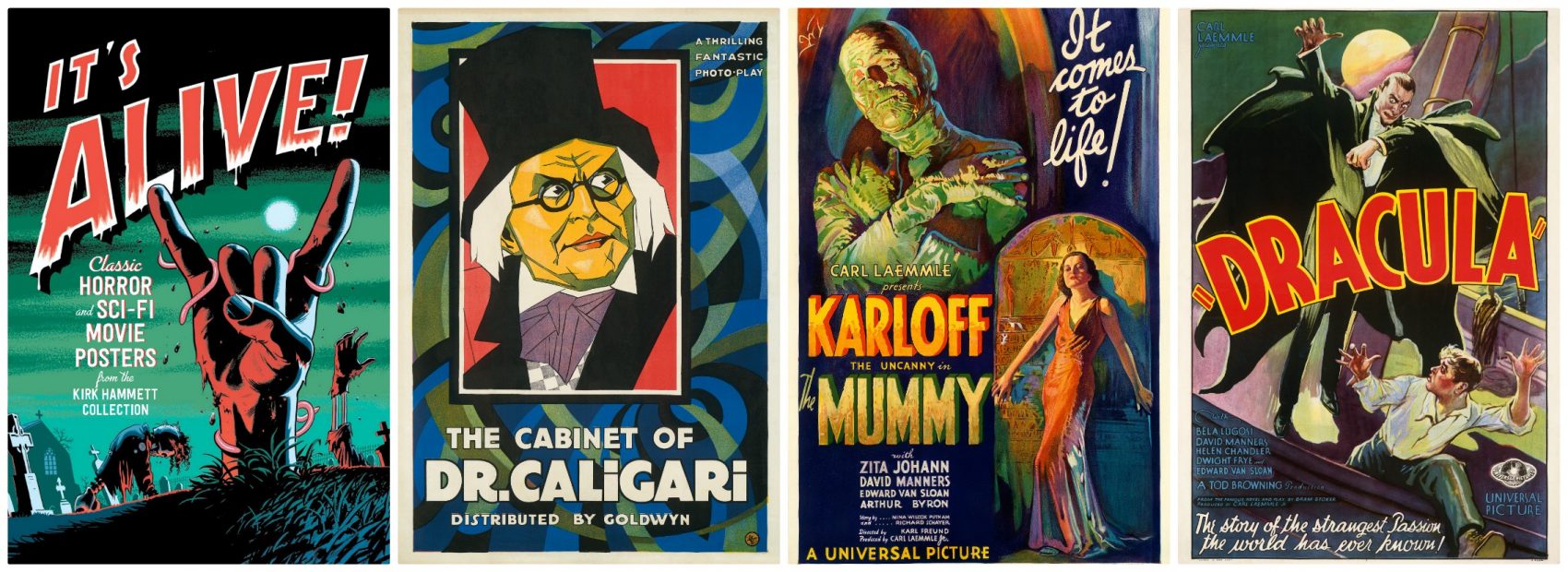
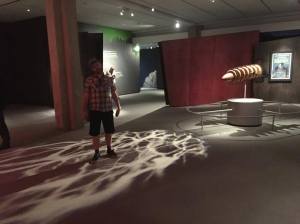
We drove down to Salem on Wednesday, spending some time amongst the wonderful waxworks and props at Count Orlok’s Nightmare Gallery and devoting a squeeful, gawping couple of hours to exploring It’s Alive! Classic Horror and Sci-Fi Art from the Kirk Hammett Collection at the Peabody-Essex Museum. Hammett may well be the most deep-pocketed and ambitious collector of horror and sci-fi paraphernalia in the world, and the tip-of-the-iceberg selection of items included in this beautifully curated exhibition are truly impressive.

0811_its-alive-2

The exhibition aims to center attention on the artists and designers who created these seminal images; despite the influence they’ve had on 20th century popular culture, the names of these creators are often all-but-forgotten.  It pays close attention to lighting and placement, augmenting the impression created by these artefacts, and inviting visitors to see themselves in and through the installation.

21057810_1435269249903048_1050439754_o

Zapped like a bug, paradoxically paralyzed and unnaturally animated. Photo courtesy Derek Newman-Stille

As curator Daniel Finamore writes, the exhibit takes a “tripartite perspective,” framing these artefacts “as the creations of artists engaged in the promotion of an industry, as the catalysts for the physiological activity and heightened mental state that occurs in response to the monsters they offer up, and as a wellspring of creative inspiration for Kirk Hammett, a contemporary musician whose own artistic contributions explore the relevancy of the horror genre in modern culture” (It’s Alive, 16-17.)


IMG_5575

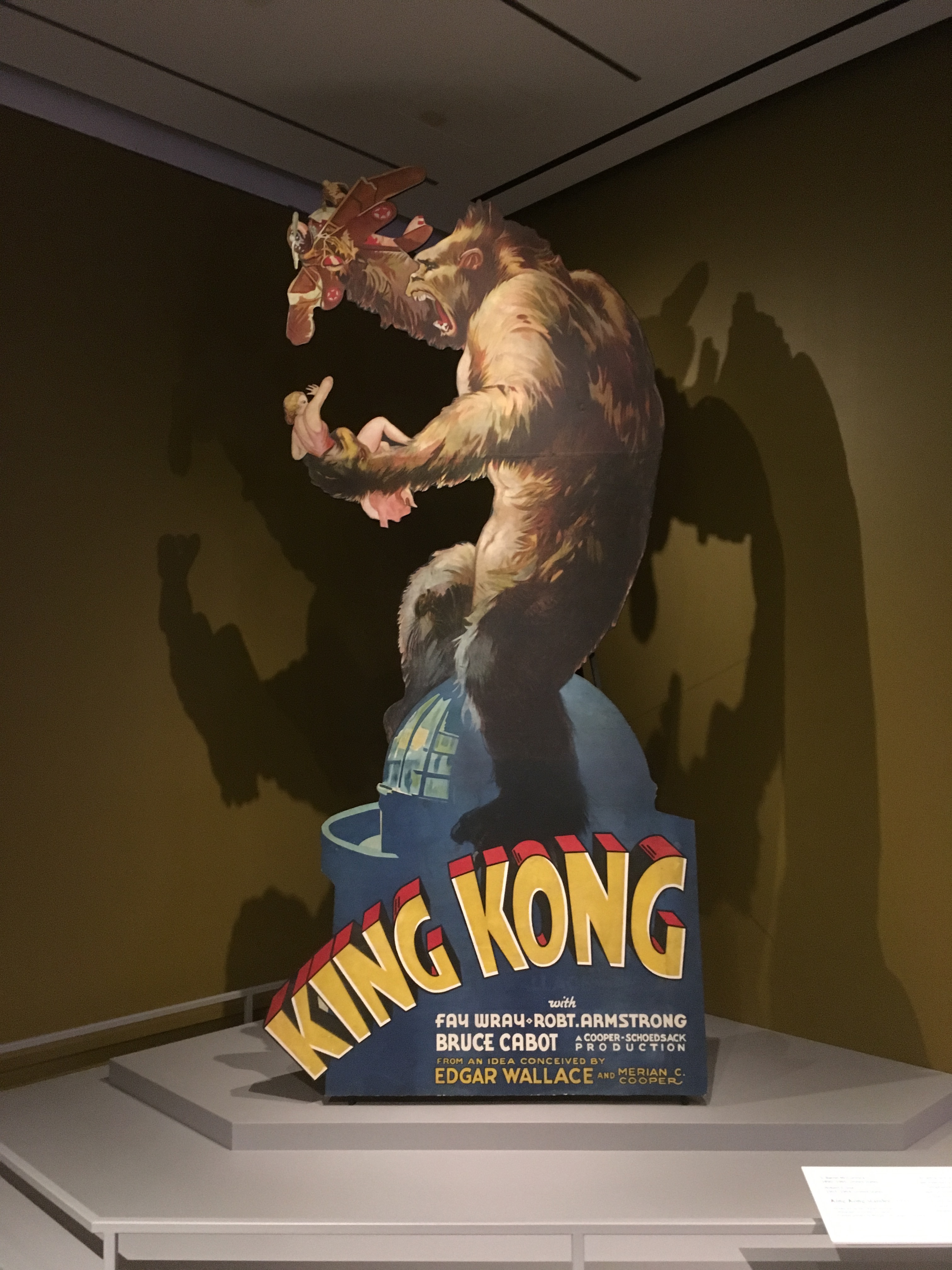
For your consideration, this epic standing lobby card for King Kong (1933), vortically chiaroscuro’ed


IMG_5544

A few of the custom classic horror-inspired guitars from Hammett’s huge collection

While the exhibit puts understandable emphasis on Hammett’s musical career and his personal and inspirational investment in these artefacts, you don’t have to be a Metallica fan to appreciate the power of the collection and curation.

MY TIME AT NECRONOMICON

Friday morning saw me on a panel, conceived and orchestrated by Farah R. Smith, called “Mesmerism and Machinations” along with Anya Martin, Steven Mariconda, Leslie Klinger, Jon Padgett, and Michael Cisco.  It was a huge topic, meant to highlight some of the under-recognized central European influences on horror and weird fiction from the Romantic to the Modern period, and a wide-ranging discussion; we were only able to briefly touch on some of the more pertinent examples, from Hoffmann and von Hofmansthal through Huysmans and Lautreamont to Kafka, Schulz and Ewers, with a constellation of figures between. I left feeling under-read, excited, and with a long list of writers whose work I’d like to get to know better.

This panel exemplified the direction I hope the Con continues to take – a spiralling-outward from Lovecraft and the Anglo-American pulp tradition he sprang from to include numerous literary and artistic movements from throughout history and across the world.

GETTING DUSTY IN THE HAY

Friday afternoon, I fled to spend a few hours in the John Hay Library, where I explored the Library’s two new exhibitions. The first, Greetings & Salutations : Lovecraft on the Road, focuses on Lovecraft’s bus trip from Providence, Rhode Island to DeLand, Florida between April and August, 1934, where he travelled primarily to visit his young friend and correspondent, R.H. Barlow. Their relationship is the subject of a fascinating New Yorker essay by Paul LaFarge, and gets a queer (meta)fictional re-imagining in his novel The Night Ocean. The connection Barlow forms between Lovecraft and William S. Burroughs, at the heart of the novel,  has been factually and critically explored by Michael Cisco’s essay “Re-Animator and Exterminator,” All of these connections sprang vividly to mind as I browsed the exhibit.

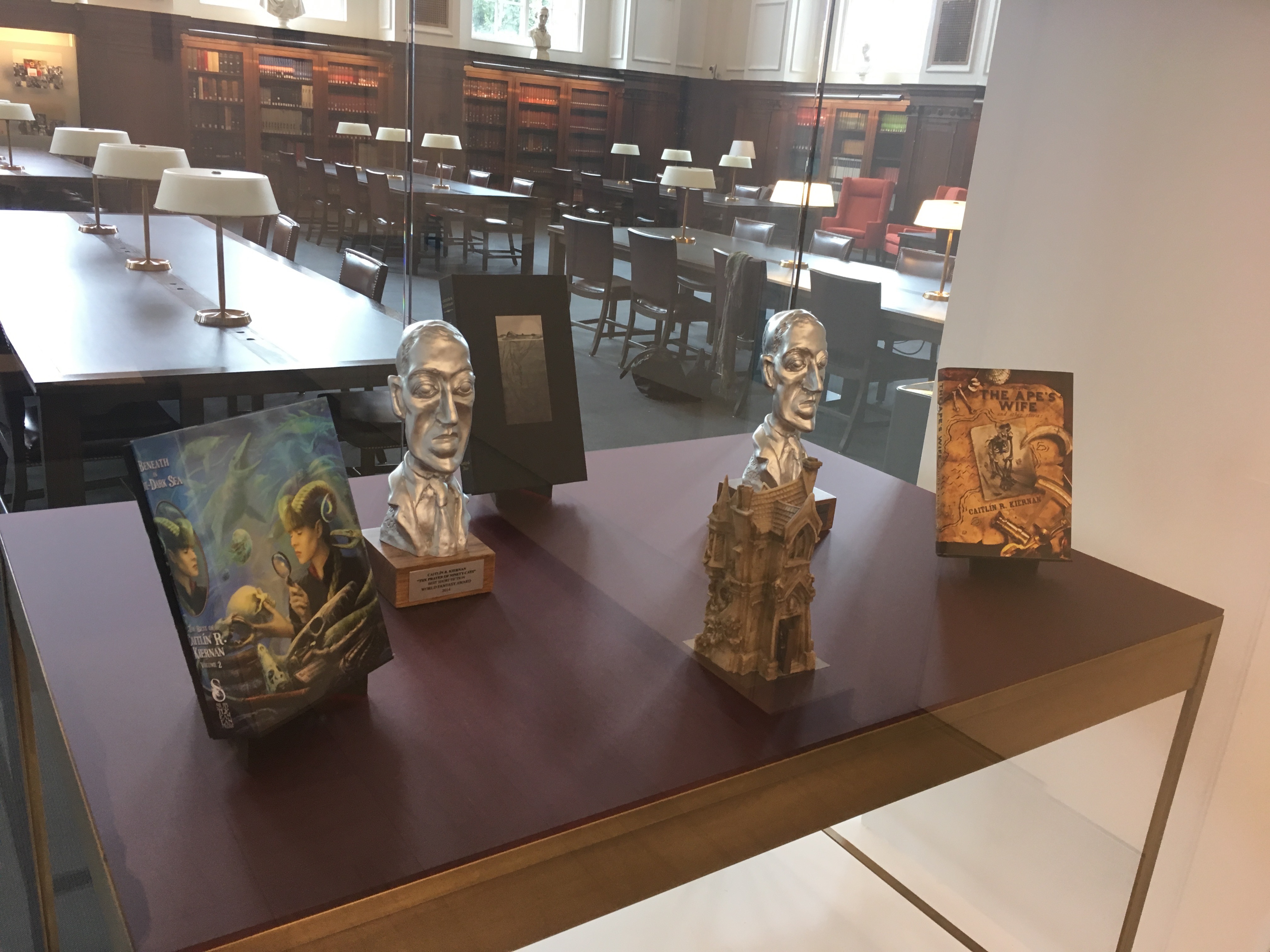
The other, The Caitlín R. Kiernan Papers @ Brown University Library, is presented as “a mid-career review highlighting Kiernan’s recent gift of her personal and professional archives.”

IMG_5612

The Caitlín R. Kiernan Papers @ Brown University Library – books and award-busts

It includes a wide array of documents and objects, from first draft copies of some of Kiernan’s earliest writings (both fictional and non-, going right back to her primary school days), panel sketches from her work in comics, including Alabaster and The Dreaming, and one of Michael Zulli’s original paintings (as Philip Saltonstall) for The Drowning Girl. The Kiernan papers, I was told, should be archived and available to the public within six months, and I’m hoping I can make it down to Providence next summer to spent some time with them, as well as finally dipping in to the Lovecraft archives. My article on Poe and Lovecraft in The Drowning Girl is finally out there, but it feels to me like the beginning of a larger study of Kiernan’s fiction, and access to Kiernan’s notes is especially important to the article on her comics-script work for The Dreaming I plan to write once I meet a few other essaying and editing commitments.

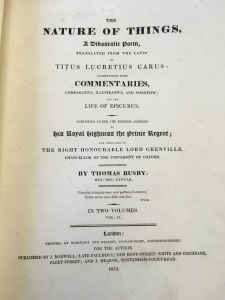
While at the Hay, I went all Wilbur Whateley and spent some time reading the 1813 translation of De Rerum Natura by composer and musicologist Thomas Busby (an edition that has proven very difficult to find; while Queens University’s Jordan Collection has one, they are missing the second volume of the book.) I was startled to discover the book’s pages remain largely uncut, and it hasn’t been consulted at all since 1960.

IMG_5623

Busby’s Lucretius, a dusty versiform beast

Where my article on Poe and Lucretius focuses on the John Mason Good translation and commentaries, Busby’s rhymed translation was also influential on both the English Romantics (Byron in particular) and writers of the American Renaissance (T. W. White praised it ardently in the Southern Literary Messenger in 1842, making it likely Poe also knew it.)

This translation is proving important to my research on Romantic and Modern reception and adaptations of Lucretius (you can read my essay on Lovecraft’s uses and abuses of Lucretius as part of the volume Lovecraftian Proceedings Volume 2) and to my interest in how Epicurean materialism shaped the development of the Gothic and modern horror.

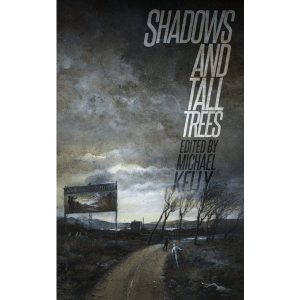
I returned in time to catch the readings in support of Michael Kelly’s much-anticipated Shadows and Tall Trees Volume Seven.

seven-600x600While the entire run of S&TT is excellent, and a must-read for those who enjoy quiet, creeping and artfully insidious horror and weirdness, this volume covers a wider range of voice and tone than its predecessors. Robert Levy, Simon Strantzas and Steve Rasnic Tem read excerpts from their contributions. It was Tem’s story, “The Erased,” that haunted me the most; it is a powerful study of the loss of self and world, a dispersion of identity and memory closely akin to dementia.
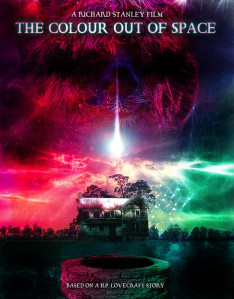
 

RICHARD STANLEY MAKES HORROR PINK AGAIN

Saturday saw me, even more out of my depth, on a panel called “Lovecraft in Context,” alongside novelists Peter Rawlik and Paul LaFarge, renowned professional annotator Leslie Klinger, and Lovecraft scholar Steven Mariconda, discussing the importance of various specific references, allusions, and intimations in Lovecraft’s work. The session ended with both panelists and audience members sharing detailed speculations about the origins of particular details in some of Lovecraft’s writings. Like that of Joyce, Nabokov, and Poe, Lovecraft’s work attracts a particular kind of obsessive blend of fandom and scholarship, study and identification; the solid attendance and preponderance of highly detailed speculations presented by both panelists and audience here really drove that home. I was glad Paul LaFarge was among the panelists, as I think his novel The Night Ocean represents both the erotics and the power dynamics of this brilliantly. See also the social power dynamics of performing knowledge in fandom analyzed by Matt Hill in  The Pleasures of Horror (2005). Hell, somebody should do a doctoral dissertation using Hills’ analysis to break down the social power dynamics on display at any given Lovecraft-themed panel at any convention, ever.

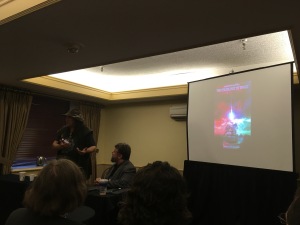
The same afternoon brought what for me was one of the highlights of the weekend –   Richard Stanley’s presentation on his film adaptation of The Colour Out of Space.  The presentation was apparently a last minute addition to the schedule, as Stanley had just gotten further funding and casting confirmations a few days before the Con started (he said he couldn’t reveal any of the casting decisions yet.) Elijah Wood’s company SpectreVision is producing the film, which Stanley’s been working on getting made for the last five years or so.

I’ve admired Stanley’s films immensely since having my fifteen-year-old brain electrified by the fusion of slasher-horror, cyberpunk music video, and dystopian art fugue that is Hardware (1990), which served as my introduction not only to Stanley’s films but to Ministry’s music and Survival Research Labs’ performance art, not to mention 2000AD magazine. I gained a new appreciation for him after watching the documentaries L’Autre Monde (2012), Lost Soul (2014), and Jodorowsky’s Dune (2014), not to mention his supremely creepy short film adaptation of Clark Ashton Smith’s “Mother of Toads.” To learn he’s finally filming Lovecraft’s most effective tale of cosmic terror, and to get a sneak peek of some of the promotional art and plot and character outlines for the film was a real treat.

IMG_6055

Richard Stanley as neither a Moreau Dog-man nor a Dagon fish-man.

Stanley talked about the departures the script took from the original story, including the addition of a teenaged daughter to the Gardner clan (and the momentary comedic reprieve that will be provided by her ill-fated attempts to stop the spread of the Colour using spells from Simon’s faux Necronomicon), his intention to rely primarily on practical effects, his desire to break from the tendency many contemporary horror films have to work with a stark or muted palette, his admiration for the lurid, saturated colours used, however differently,  by Roger Corman and Dario Argento and his desire to create a psychedelic experience with the film, which will, he declared, change the world’s perception of bright pink forever. You can get a sense of this already from an early pre-production teaser trailer from 2013, prior to SpectreVision picking it up.  Mike Davis of Lovecraft eZine expressed understandable reservations about the direction the film was taking back when Stanley first pitched, but my enthusiasm was fired hearing Stanley talk about the project. It’s going to be idiosyncratic and bizarre, I’m sure, but perhaps the better for it.

IMG_6058

I asked about his initial preference for adapting The Dunwich Horror rather than Colour (more monsters, less abstraction; it has shoggoths, and the 70s version is so bad somebody needs to do a better one) and he spoke at length about the dearth of cosmic horror in the film adaptations of Lovecraft’s works thus far, including in Stuart Gordon’s Dagon (2000; a film he otherwise much admires and played a small role in) and in contemporary horror films generally, repeating his oft-stated admiration for both the original Alien film (which, he pointed out, was due more to Dan O’Bannon’s vision than Ridley Scott’s) and Carpenter’s The Thing as rare exceptions.

colouroutofspaceposter (1)

Stanley pointed out that the animal face in the background is a mutated llama. The film’s Gardners are llama farmers.

BEHIND LOVECRAFT’S BACK

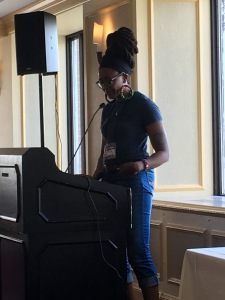
Another major highlight for me was getting to hear Nnedi Okorafor read from her work once more (the first time being her GoH stint at ICFA a couple of years back.)

In this case, she read short excerpts from both her novels Binti and Lagoon. Okorafor is a singularly charismatic and versatile reader – never pass up a chance to hear her.

IMG_6092

Nnedi Okorafor reads from Lagoon.

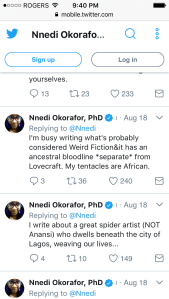
In both her statements during the Con and even moreso via social media, with her characteristic incisiveness, frankness, and humour, Okorafor raised pointed questions about Lovecraft’s place in modern weird fiction, highlighting the perverse (but perhaps necessary, given that Providence’s primary tie to weird fiction is via Lovecraft?) paradox faced by NecronomiCon, as it tries to, on the one hand, transcend Lovecraft’s xenophobia and showcase a multiplicity of diverse voices of the weird, while on the other hand risking a kind of re-colonization of these voices, by linking them to Lovecraft and his work, suggesting Lovecraft has some kind of influence over them. In Okorafor’s memorable words, while what she writes is “probably considered Weird Fiction,” (and Gary Wolfe makes a strong case for this in his essay “The Queen of Future Weird”)  it has an “ancestral bloodline *separate* from Lovecraft. My tentacles are African.”

IMG_6550IMG_6551


ARS NECRONOMICA

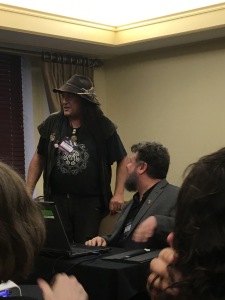
Sunday morning brought my third and final speaking engagement, as I gave a brief talk as part of the Armitage academic-track panel “Emanations of Abominations.” My focus was on some of the ways horror mangaka Junji Ito’s work responds to Lovecraft’s theories of weird and cosmic fiction. In particular, Ito has credited his use of the spiral motif throughout his magnum opus Uzumaki to Lovecraft’s nefarious influence, and I sought to elucidate some of the ways this Ito adapted Lovecraft’s concept of cosmic horror via his relentless transfigurations and transvaluations of spirality.

Following that, we headed over to RISD’s Woods-Gerry Gallery to glom about in the exhibit Wonders of the Visible Weird, which “features paintings, prints, sculptures, and illustrations by more than seventy contemporary artists who explore the themes of weird fiction and cosmic horror, inspired by the works of Providence-born writer H. P. Lovecraft and other authors and artists of Weird. The exhibit showcases new and upcoming artists as well as new or rarely seen works by many of the established artists who have put form to the unnameable and indescribable for decades.”

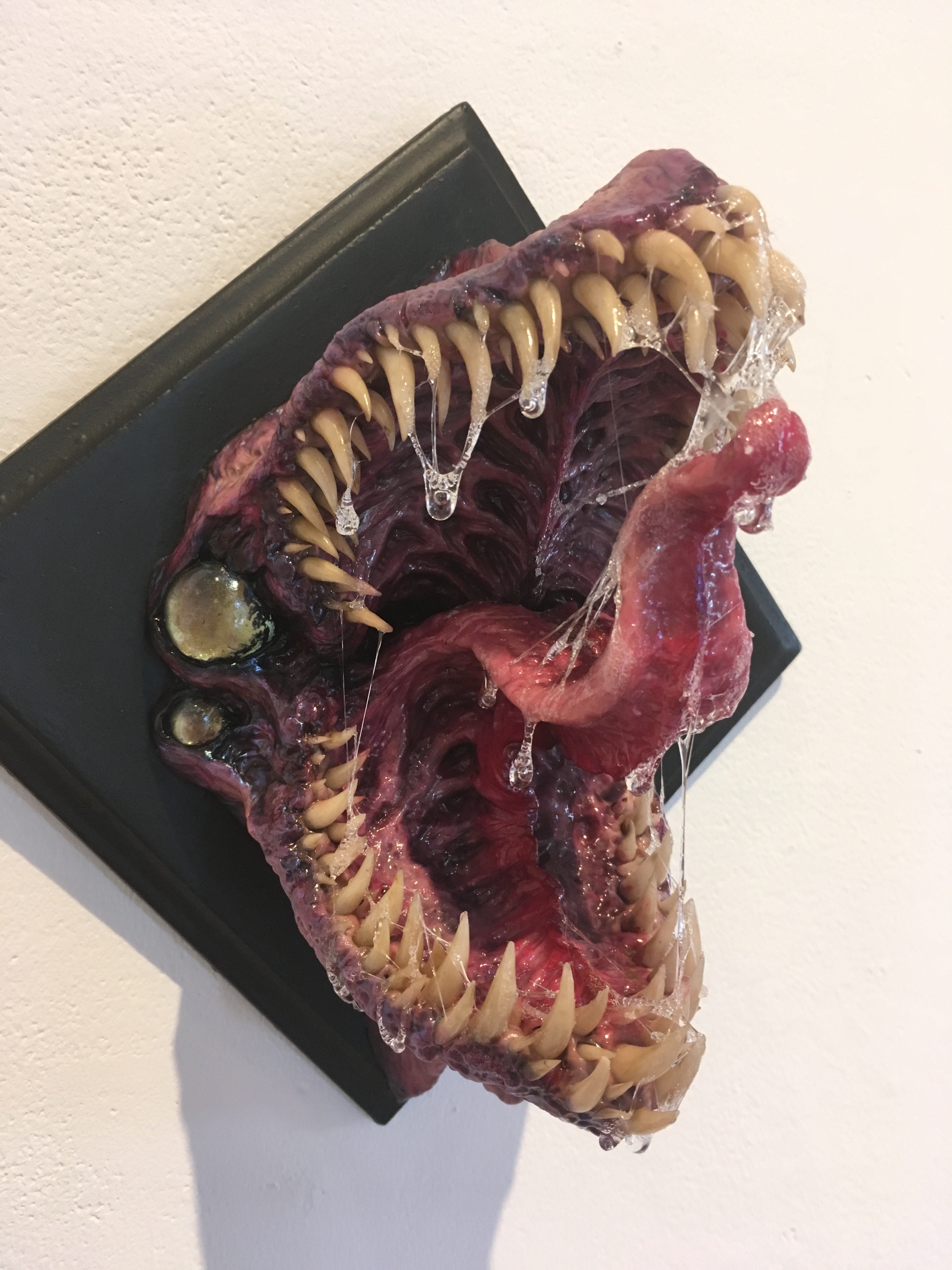
There were a lot of beautiful, strange, hideous, and ineffably-effed-up creations on display; the array of fantastic visual art and crafts are another of the things that make NecronomiCon unique. For example, this modest little specimen that numbers among my favourites, “Mother, Mother Ocean” by Karen Main:

IMG_6504 (1)


It seemed strikingly apropos when, during our drive back to Canada Monday morning, the brief eclipse temporarily translated the world into a painting by Giorgio de Chirico, and when, Tuesday morning, I awoke to a tornado watch for the Southeastern Ontario region. I knew those impetuous invocations to Yog-Sothoth during Sunday night’s performance of the Dunwich Horror Picture Show were a terrible bloody idea.


Tagged , , , , , , , , , , , , , , , , , ,